Choosing your tiles
Large-format tiles: how to choose them for your home
Tile size, room proportions and the look you want: the points to consider when choosing a format that suits your space.
Indoor tiling
Living room, kitchen, entrance or hallway: we lay your tiles on a properly prepared substrate, with a planned layout and clean finishes, for floors and walls that last.
At a glance
Tiling means fixing ceramic tiles to a substrate (screed, concrete slab, existing tiles, plasterboard) with a tile adhesive, then filling the joints with grout. The quality of the result depends as much on substrate preparation and layout planning as on the laying itself.
We work on new builds and renovations, on the floors and walls of every room in the house, in Paris, Évreux and the surrounding areas.
Materials
Each material has its uses. We help you choose according to the room, the foot traffic and the upkeep you want.
The most common choice for floors: very low porosity, hard-wearing and available in many looks, from stone and wood to concrete and marble.
Coloured through its whole thickness, so any chip is far less visible. A good choice for high-traffic rooms.
Glazed wall tiles that are more porous and lighter: ideal for bathroom walls and splashbacks, but not designed for floors.
Small pieces mounted on a mesh, in glass, ceramic or stone: perfect for niches, shower trays and curved surfaces.
Their edges are ground after firing for very precise dimensions, which allows thin grout lines and a more seamless look.
Materials with authentic character that are more porous and need a protective treatment and suitable upkeep.
Our method
Much of a tiling job is decided before the first tile goes down.
We check that the substrate is flat, sound, clean and dry, and note any particular features: thresholds, doors, pipes and cables, existing coverings.
Depending on the assessment: removing the old covering, a levelling compound to correct flatness, a bonding primer, or tiling over the existing surface where possible.
We set the direction of the tiles, the starting point and where the cuts fall, to avoid thin strips at the edges and align the joints with the lines of the room.
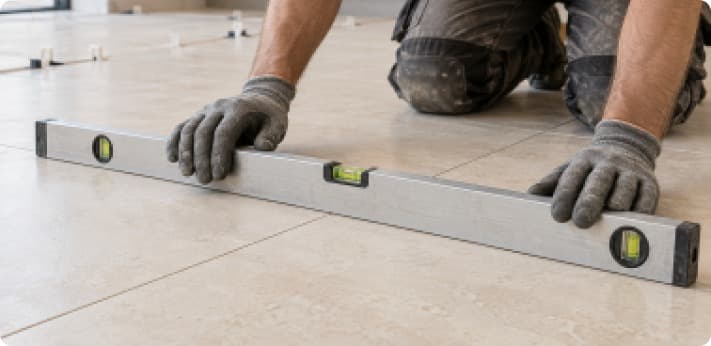
The adhesive is chosen for the substrate and the tile size, then spread with a notched trowel, with back-buttering for large tiles. Every tile is checked with a straightedge and a level.
Once the adhesive has cured, we grout, then fit the skirting, trims and flexible movement joints around the edges and in the corners.
End-of-job cleaning, a final check with you and advice for the first clean.
Tell us about your room and the tiles you have in mind: we will arrange a visit and a free quote.
Tools
Professional, well-maintained equipment suited to every tile size.
Good practice
Our installations follow the trade’s reference documents.
Your questions
Often, yes, if the existing tiles are sound, well bonded and flat. They are degreased and coated with a suitable primer before tiling with a compatible adhesive. The clearance under doors and at thresholds also needs checking. If tiles sound hollow or are cracked, removing them is the better option.
With a standard adhesive, light foot traffic is usually possible after 24 hours, and you need to wait longer before moving in heavy furniture. The exact time depends on the adhesive, the temperature and the thickness: we confirm it at the end of the job.
It depends on the tile and the substrate. Rectified tiles allow thin joints of around 2 mm, while non-rectified tiles need wider joints to accommodate their slight variations in size. Joints are never left out: they absorb movement.
No: ceramic wall tiles are not designed to take foot traffic. Conversely, floor tiles can usually be laid on walls. On floors we check wear resistance and, in wet rooms, slip resistance.
Yes, in fact tiles conduct heat very well. The heating must go through its start-up procedure before tiling, and the job calls for a suitable adhesive and the necessary movement joints.
For an average-sized room, allow a few days for preparation, laying, curing and grouting. A screed or levelling compound adds drying time before tiling. The detailed schedule is set out in our quote.
Our other services
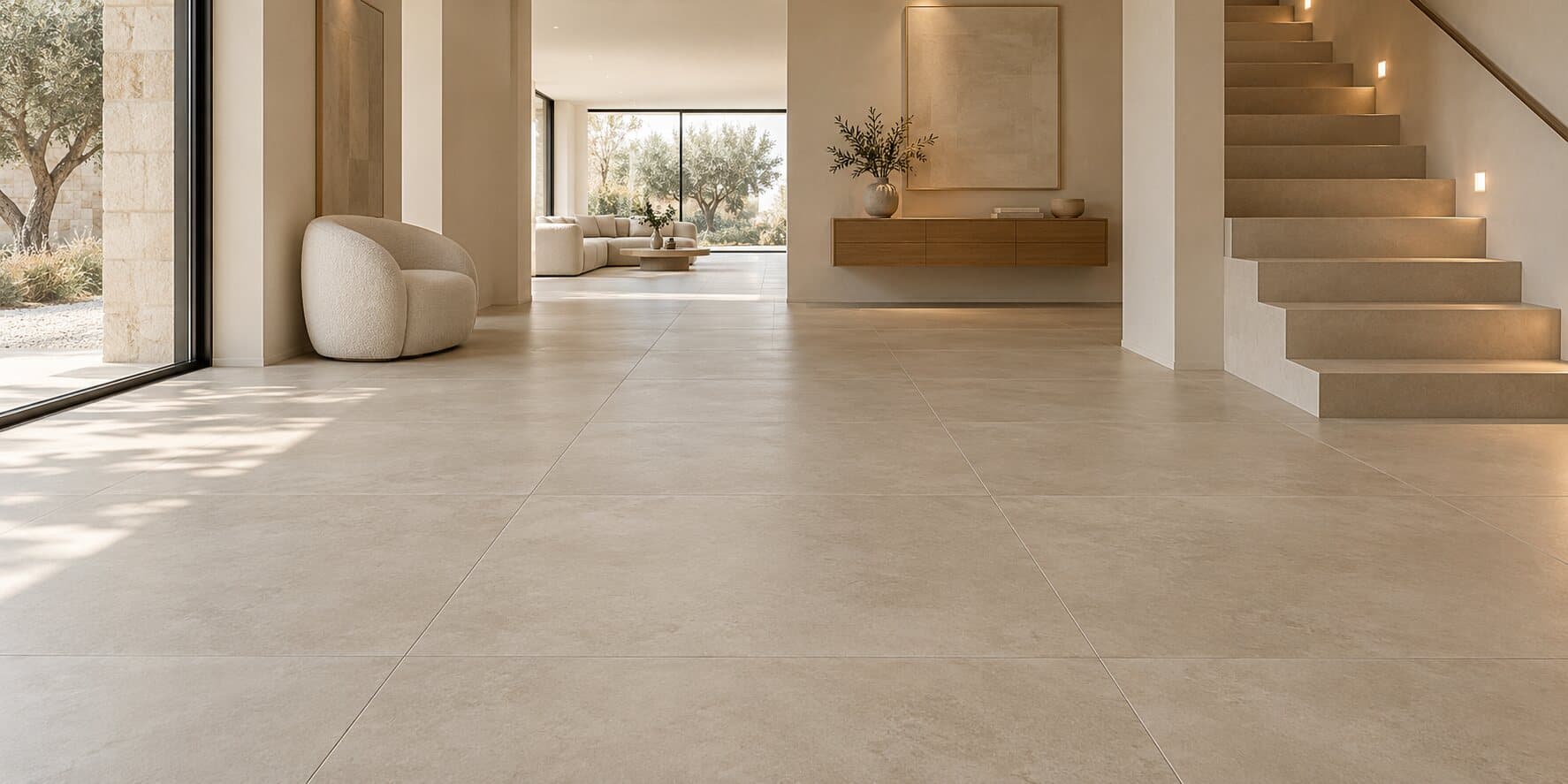
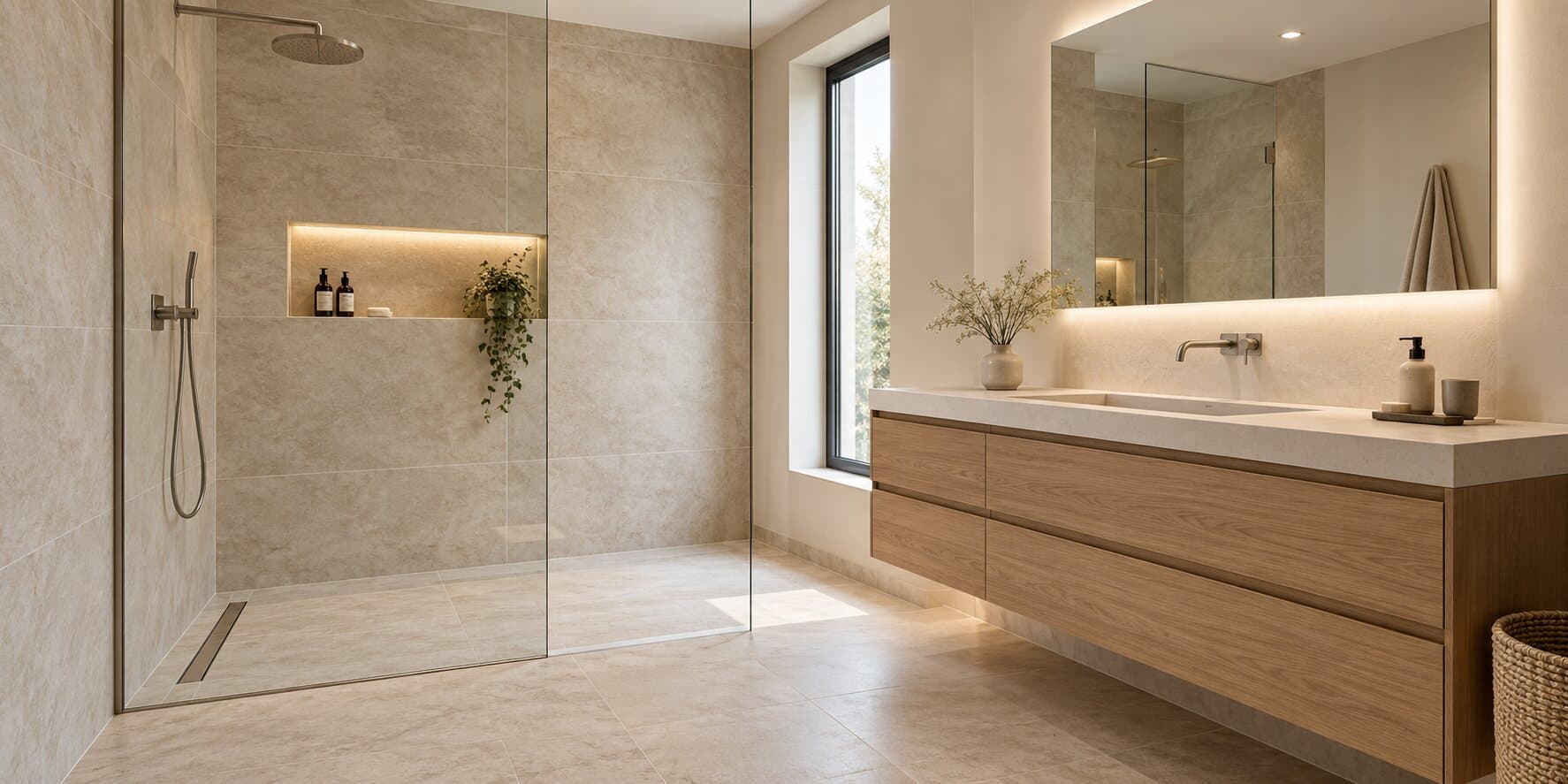

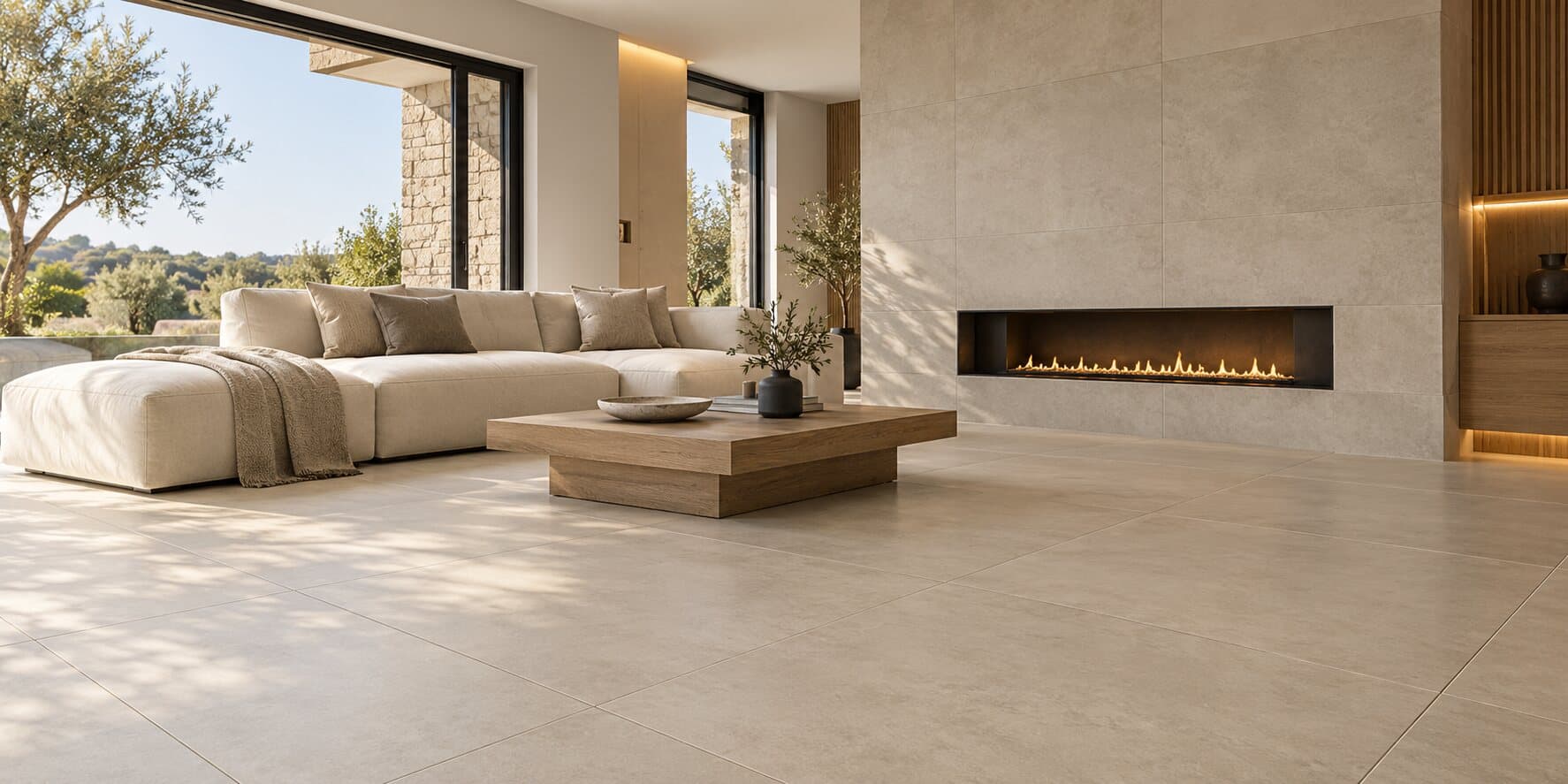
 AI-edited image
Choosing your tiles
Tile size, room proportions and the look you want: the points to consider when choosing a format that suits your space.
Choosing your tiles
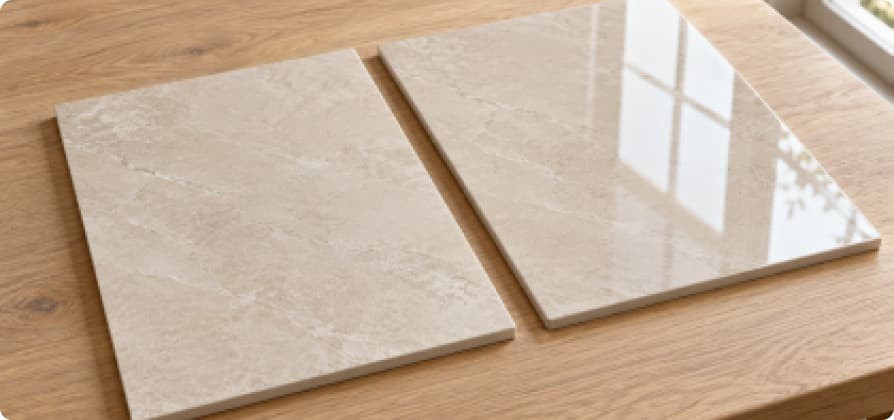
Light, look and maintenance: discover the differences between these finishes to choose the one that suits your room.
Finishes & details
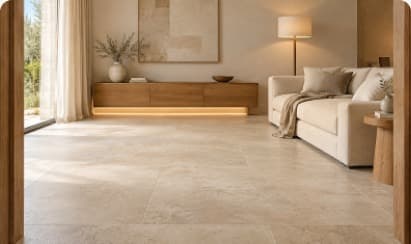
Tone on tone or subtle contrast: explore the combinations that bring out the best in your tiles and their lines.