Choosing your tiles
UPEC, R11, PEI: how to read a tile’s technical data sheet
For floor tiles, three pieces of information matter most: slip resistance (R9 to R13 with shoes, A, B or C barefoot), wear resistance (UPEC or PEI) and water absorption, which decides whether a tile can go outdoors. The right level depends on the room, not on the highest score.
A tile’s technical data sheet often lists a string of abbreviations. They measure different things, with different tests, and none of them alone tells you whether a tile suits your room. When we prepare a floor or wall tiling job, we read them together, starting from how the room is used: barefoot or in shoes, dry or wet, indoors or out.
Here is what each rating means, what it does not tell you, and a room-by-room table of benchmarks.
What you find on a data sheet
Depending on the manufacturer and the country of origin, the data sheet may show:
- slip resistance: an R rating, a class A, B or C, sometimes the result of another test, such as the pendulum test;
- wear resistance: the UPEC rating for tiles certified in France, the PEI class for glazed tiles;
- the water absorption group under the EN 14411 standard, and frost resistance;
- resistance to stains and chemicals;
- manufacturing data: rectified or not, calibre, shade batch, thickness.
A missing figure is not necessarily a flaw, but for a terrace or a shower we ask the supplier for it before ordering.
The UPEC rating: four letters, four kinds of resistance
Specific to France and set by the CSTB, the French building research centre, the UPEC rating assesses a floor covering on four criteria. Each letter is followed by a number, sometimes with an “s” for more severe use: the higher the index, the more resistant the covering.
- U for wear from foot traffic: rubbing soles, grains of sand;
- P for indentation: furniture legs, heels, dropped objects;
- E for behaviour with water, from occasional spills to frequent washing;
- C for resistance to chemicals, from household cleaners to food.
Rooms are classified the same way, and you choose a tile that matches or exceeds the room on every index. In a home the requirements are modest; high indices mainly concern shops and public buildings. The UPEC rating is not compulsory: many products, imported ones in particular, do not carry it.
Slip resistance: R9 to R13 with shoes, A, B, C barefoot
Two German tests are the reference. In both, a person walks on a ramp whose angle is increased until they slip: the angle reached gives the class.
| Rating | Test conditions | Scale | For which floors |
|---|---|---|---|
| R (DIN 51130) | Safety shoes, floor coated with oil | From R9, the least slip-resistant, to R13 | Floors walked on in shoes: living areas, kitchens, outdoors |
| A, B, C (DIN 51097) | Bare feet, floor wetted with water and a wetting agent | From A to C, the most slip-resistant | Barefoot areas: bathrooms, showers, pool surrounds |
The two scales cannot be converted into each other: an R10 tile is not automatically class B. For a bathroom, the barefoot class tells you more; for an entrance or a terrace, the R rating does. The word “anti-slip” has no common definition, so go by the stated class.
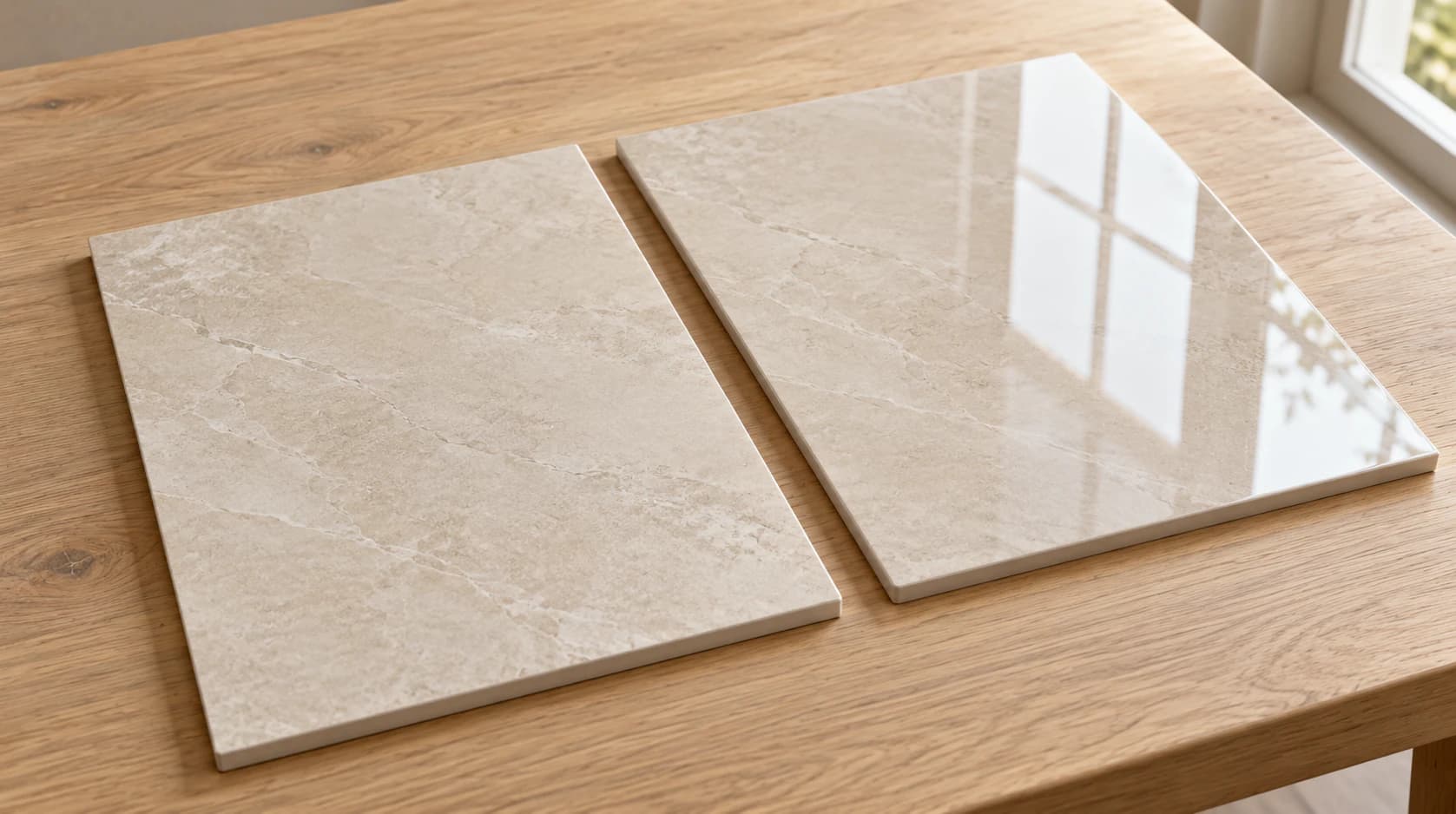
A more slip-resistant surface is also more textured, and so a little harder to clean: an R12 or R13 tile, intended for commercial kitchens or industrial premises, has no place in a living room. The finish matters too, as our article on matt or glossy tiles explains.
PEI class: how well the glaze resists abrasion
The PEI class, from I to V, measures how well the surface of glazed tiles resists wear: an abrasive load is rotated on the glaze and the number of revolutions before wear becomes visible is recorded.
- PEI I: walls, or floors walked on barefoot;
- PEI II: light-traffic floors, such as a bedroom or a bathroom;
- PEI III: every room in a home under normal use;
- PEI IV: heavy traffic, an entrance opening onto the outside, small shops;
- PEI V: busy public spaces.
This class only applies to the glaze. Full-body porcelain or unglazed porcelain is assessed with a different deep abrasion test, and wear shows less because the colour runs right through the tile. At the same class, a dark or glossy glaze shows traffic marks sooner than a pale, matt one.
Water absorption, group BIa and frost resistance
The EN 14411 standard classifies ceramic tiles by how they are made and how much water they absorb. The letter A stands for extruded tiles, B for pressed tiles, and the Roman numeral for porosity:
| Group | Water absorption | Examples |
|---|---|---|
| BIa | 0.5% or less | Porcelain, outdoor pavers |
| BIb | Over 0.5% and up to 3% | Very low-porosity stoneware |
| BIIa and BIIb | Over 3% and up to 6% (BIIa), up to 10% (BIIb) | Indoor tiles of medium porosity |
| BIII | Over 10% | Ceramic wall tiles (faïence) |
Low absorption helps a tile resist frost, but frost resistance is checked by a specific test and should appear on the data sheet. Outdoors, we choose a porcelain tile declared frost-resistant. Faïence, being very porous, stays on indoor walls.
Rectified, calibre, shade: other useful information
Some details are not performance ratings, but they change how the tiles are laid and how they look:
- a rectified tile has ground edges and very consistent dimensions, which allow narrow joints on a very flat substrate;
- a non-rectified tile has a calibre: order a single calibre to keep the joints even;
- shade variation, often rated from V1, uniform, to V4, highly varied, indicates the overall look, especially for stone and wood effects;
- thickness matters for threshold heights and, outdoors, for laying on pedestals.
The batch or shade number identifies a production run, and colour can differ slightly from one batch to the next: order all the tiles at once, with an allowance for cuts and a few spares.
Which rating for which room
These are the benchmarks we apply in homes, in Évreux as in Paris. The manufacturer’s recommendations and any requirements specific to your project always take precedence.
| Room | Slip resistance | Wear | Also check |
|---|---|---|---|
| Living room, bedrooms | R9 is generally enough | PEI III, or unglazed porcelain | Shade and calibre over large areas |
| Entrance | R10, for wet soles | PEI IV, or full-body porcelain | A barrier mat limits abrasion |
| Kitchen | R10 | PEI III to IV | Resistance to stains and grease |
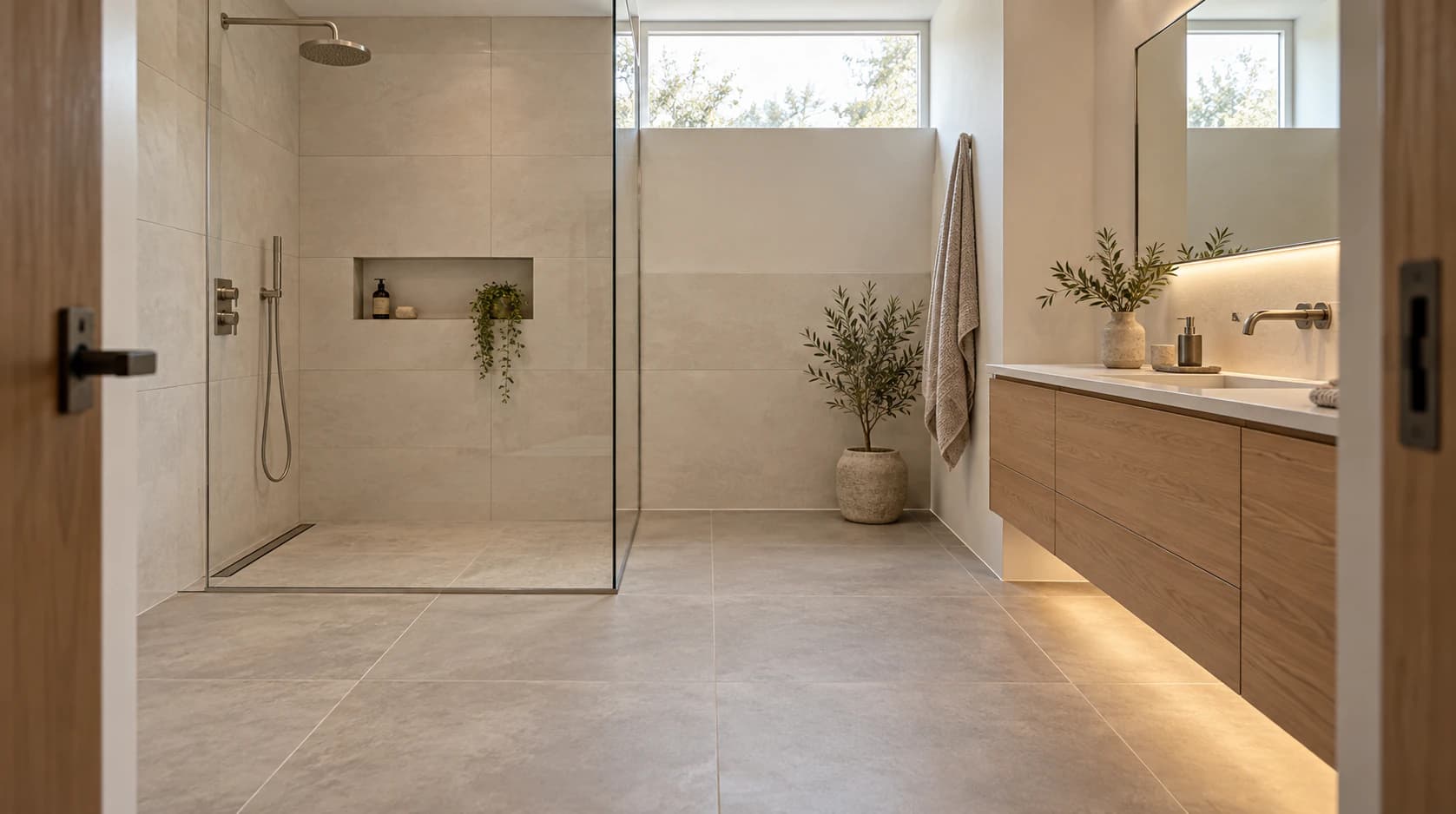
| Bathroom | R10 or class A | PEI II to III | Matt or lightly textured finish |
| Level-access shower | Class B, or even C | Not a deciding factor | Small tiles or mosaic with a central drain |
| Terrace, balcony | R11 | PEI IV, or unglazed porcelain | Frost resistance, group BIa, 20 mm pavers on pedestals |
| Outdoor steps | R11 or higher | Unglazed porcelain recommended | Grippy, clearly visible step nosings |
| Private pool surround | Class B, C for steps and slopes | Unglazed porcelain recommended | Frost resistance, resistance to pool water treatments |
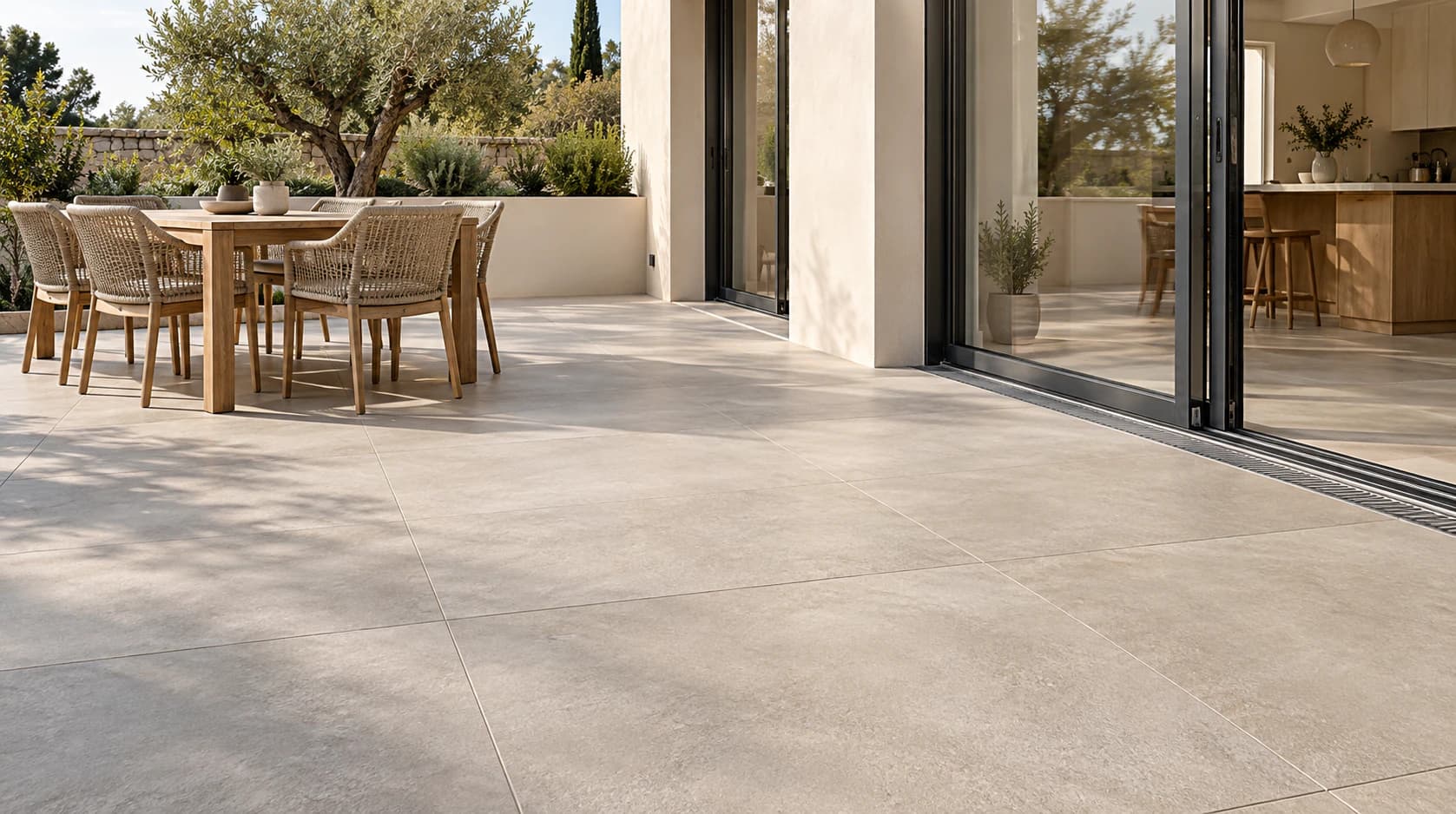
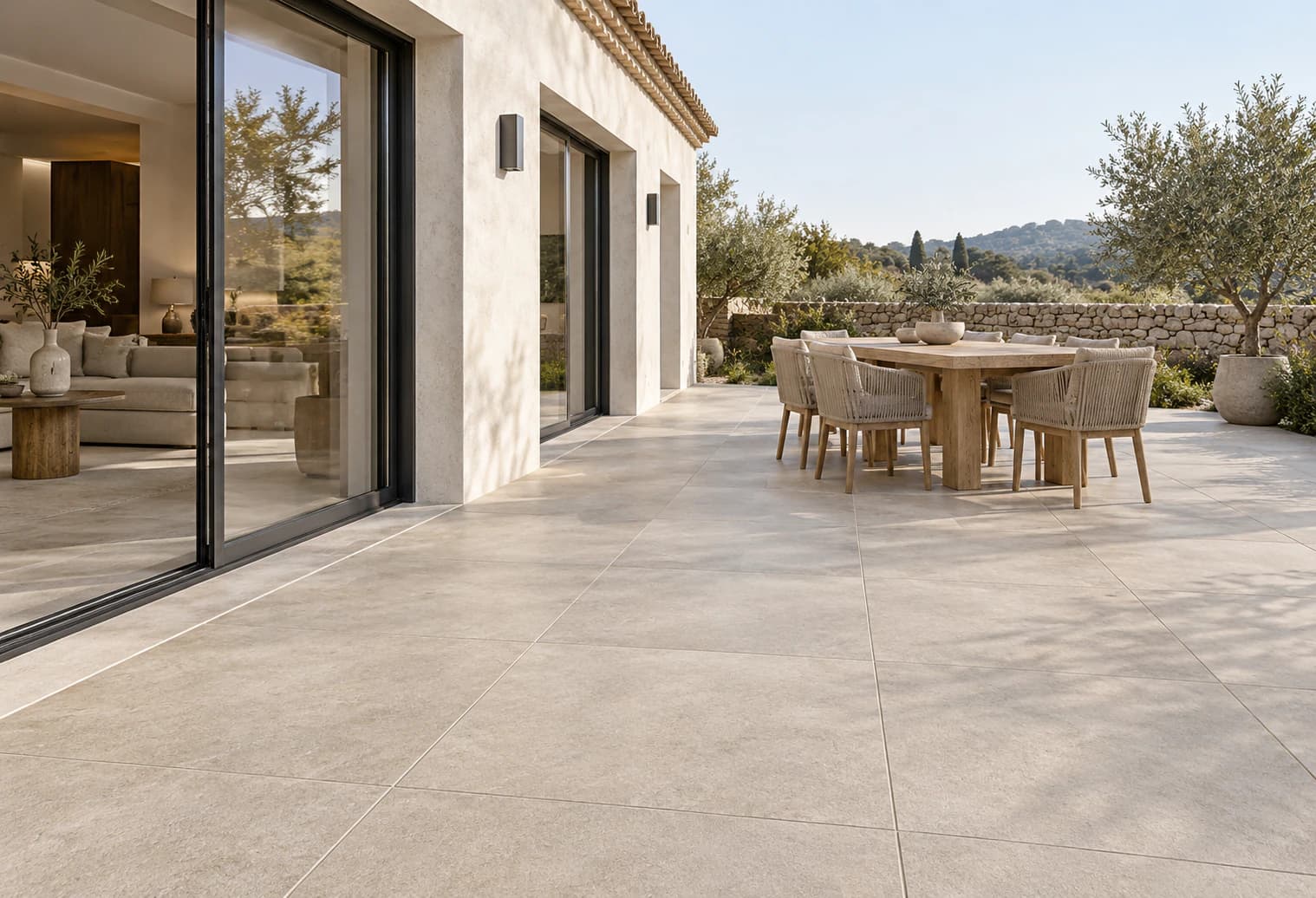
Outdoors, the same design often comes in two finishes of the same colour: a smoother indoor surface and a more textured outdoor version, which lets the living room floor continue onto a tiled terrace. A good rating does not make up for poor installation: a terrace with no fall keeps slippery puddles, whatever the tile. See also our articles on terrace tiles and bathroom tiles.
Frequently asked questions
Can R11 tiles be used indoors?
Yes, nothing prevents it, and it is useful for continuing a terrace into the living room. Its more textured surface does hold more dirt and needs more vigorous cleaning. In a dry room, R9 or R10 is more comfortable day to day; R11 mainly makes sense where the floor is often wet.
What is the difference between the PEI class and the UPEC rating?
The PEI class measures only one thing: how well the glaze resists abrasion, and only on glazed tiles. The UPEC rating is broader: it also scores indentation, behaviour with water and resistance to chemicals, and applies to glazed and unglazed tiles alike. It is specific to France, whereas the PEI class appears on many international data sheets.
Are tiles without a UPEC rating lower quality?
Not necessarily. The rating is a voluntary step taken by the manufacturer, and many good tiles, imported ones in particular, do not carry it. You then rely on the other data: water absorption group, PEI class for a glazed tile, slip resistance and frost resistance for outdoor use.
Can existing tiles be made slip-resistant?
There are chemical treatments that roughen the surface and adhesive strips for steps, but their effect depends on the tile and fades with time and cleaning. On a terrace or in a shower that is genuinely slippery, replacing the tiles with ones of the right class remains the lasting solution.
How can I tell whether a tile is frost-resistant?
Check the data sheet or the manufacturer’s documentation: frost resistance is stated when it has been confirmed by the frost resistance test. Very low water absorption, like that of porcelain, is a good sign, but it does not replace this statement. Without clear information, we do not lay a tile outdoors in an area exposed to frost, such as Normandy or the Paris region.