Choosing your tiles
Cement tiles, metro tiles and zellige: choosing and laying them
A true cement tile is pressed rather than fired, porous, needs sealing and does not tolerate acids. Metro tiles are glazed ceramic or porcelain and easy to live with. Zellige is handmade glazed terracotta, irregular by nature and best suited to walls.
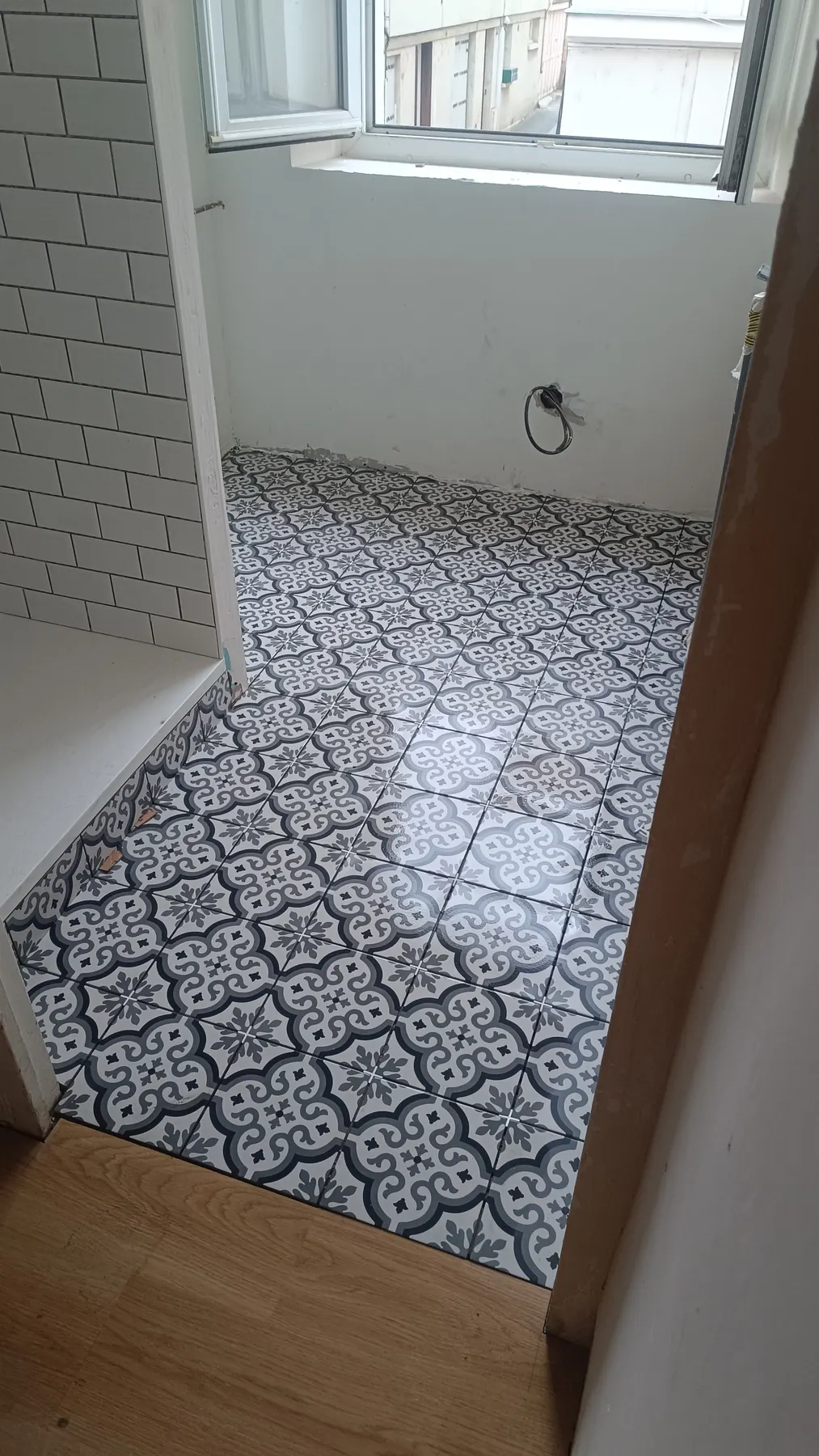
These three tiles share a strong style that turns up in kitchens, bathrooms and hallways. Technically, though, they have almost nothing in common: manufacture, porosity, installation and care are completely different. Before choosing from a photo, it is worth knowing what each one asks of you day to day.
True cement tiles: pressed, not fired
A cement tile, also called an encaustic or hydraulic tile, is not fired. A coloured layer of cement, fine mineral powder and pigments is poured into a mould with dividers that form the pattern, then backed with a coarser mortar and compressed in a hydraulic press. The tile then hardens slowly, like concrete. It is thicker and heavier than an ordinary tile, and each piece shows slight variations in shade.
That way of making them is what gives them their charm, but it also brings constraints:
- they are porous: unprotected, they soak up oil, wine, coffee and even the pigments of a coloured grout;
- they do not tolerate acids: vinegar, lemon, descalers and acidic cement-haze removers attack the surface and leave permanent dull marks;
- they develop a patina: over the years the surface softens and the colours wear slightly, which many people love.
So they are protected with a water- and oil-repellent impregnating sealer, applied before grouting and renewed depending on the product and the use, and cleaned with pH-neutral products.
Cement-look tiles: patterned porcelain
Many of the cement-effect tiles sold today are porcelain, sometimes glazed ceramic, with a printed pattern. They lack the depth and patina of the real thing, but they absorb almost no water, need no sealing and tolerate ordinary household cleaners, even in a shower.
| Criterion | Cement tile | Cement-look porcelain |
|---|---|---|
| Manufacture | Pressed, not fired, pattern coloured through a few millimetres | Fired at high temperature, pattern printed under the glaze or on the surface |
| Porosity | High: sealing is essential | Very low: no treatment needed |
| Acidic products | Never | Mostly tolerated, check the manufacturer’s data sheet |
| Showers and very wet areas | Not recommended | Suitable, with an anti-slip finish on the floor |
| Ageing | Develops a patina, can be restored by grinding | Stays stable over time |
| Installation | More technical: sealing before grouting, no acid cleaning | Similar to ordinary porcelain |
For a busy family bathroom or a heavily used hallway, we often point clients towards the look-alike. In a kitchen or living room where you enjoy materials that age, the true cement tile remains a beautiful choice, as long as you accept the upkeep.
Metro tiles: bevelled or flat, and above all the pattern
Metro tiles take their name from the small white rectangles of the Paris underground, the same family as subway tiles. They come in ceramic or glazed porcelain, often in small sizes such as 7.5 × 15 or 10 × 20 cm, with a bevelled or flat edge. The bevel catches the light and adds relief; a flat tile gives a more graphic wall that is easier to clean. They can be laid in several ways:
- in a half-offset brick bond, the classic layout;
- in a straight stack, joints aligned, horizontal or vertical, for a more contemporary look;
- in herringbone, which needs more cuts and rigorous setting-out;
- combined with other tiles: metro on the walls and cement tiles on the floor, as at the top of this article.
Grout colour changes everything. White grout on white metro tiles gives a soft, bright wall; grey or charcoal grout outlines each tile but also shows the slightest misalignment, which calls for flawless setting-out. Our colour advice is in the article on grout colour. Since a cut removes the bevel, the tile layout plan puts the cuts in corners, under units or against the worktop.
Zellige: handmade and irregular by nature
Zellige is a small terracotta tile shaped and glazed by hand, following the Moroccan tradition. From one tile to the next, the thickness, edges, shade and shine vary; the glaze may show fine crazing and a few chips on the edges. These are not defects: they are what gives the wall its shifting reflections.
Laying it is a craft of its own. Tiles from several boxes are sorted and mixed before starting, to spread the shades. They are set with very tight joints, on a fairly generous bed of adhesive to take up differences in thickness. Because the edges and the crazing are porous, a protective treatment is often applied before grouting, as the manufacturer recommends, so the grout does not stain the glaze.
Zellige is mostly at home on walls: splashbacks, bathroom walls, feature walls. In a shower it works on the walls, over waterproofing, with regular gentle cleaning.
Where each tile works: floor, wall, shower, kitchen
| Use | Cement tile | Metro tile | Zellige | Cement-look porcelain |
|---|---|---|---|---|
| Indoor floor | Yes, with sealing and gentle cleaning | Only porcelain ranges made for floors | Not recommended | Yes |
| Wall and splashback | Possible, but heavy and prone to staining | Yes | Yes | Yes |
| Shower | Not recommended | Yes, on walls | On walls, with regular cleaning | Yes, floor and walls |
| Outdoors | Avoid where it freezes | Rarely suitable | Avoid where it freezes | Depends on the data sheet (frost resistance) |
In a bathroom, the safest combination is metro or zellige on the walls with a porcelain floor, cement-look or not. See also our articles on choosing bathroom tiles and kitchen floor and splashback tiles.
Laying and cleaning precautions
These tiles are less forgiving than plain porcelain. On our jobs, we follow a few rules:
- follow the manufacturer’s data sheet for the adhesive and how to apply it, often choosing a light-coloured adhesive under pale cement tiles and white zellige;
- seal cement tiles before grouting, then remove excess grout straight away, tile by tile;
- choose a thin cement grout in a shade close to the background of the pattern, testing it first on a spare tile;
- never remove cement haze from cement tiles with an acid cleaner, then clean them with pH-neutral products, without bleach or descaler.
Matching patterns, borders and shades
A cement-tile floor is designed before it is laid. Patterns that join up across four tiles, such as rosettes, must be turned the right way, and the tiles are dry-laid first to check the design. You can also compose a rug effect: a patterned field framed by a border and plain tiles, centred on the room or on the door axis, with the cuts pushed out to the edges.
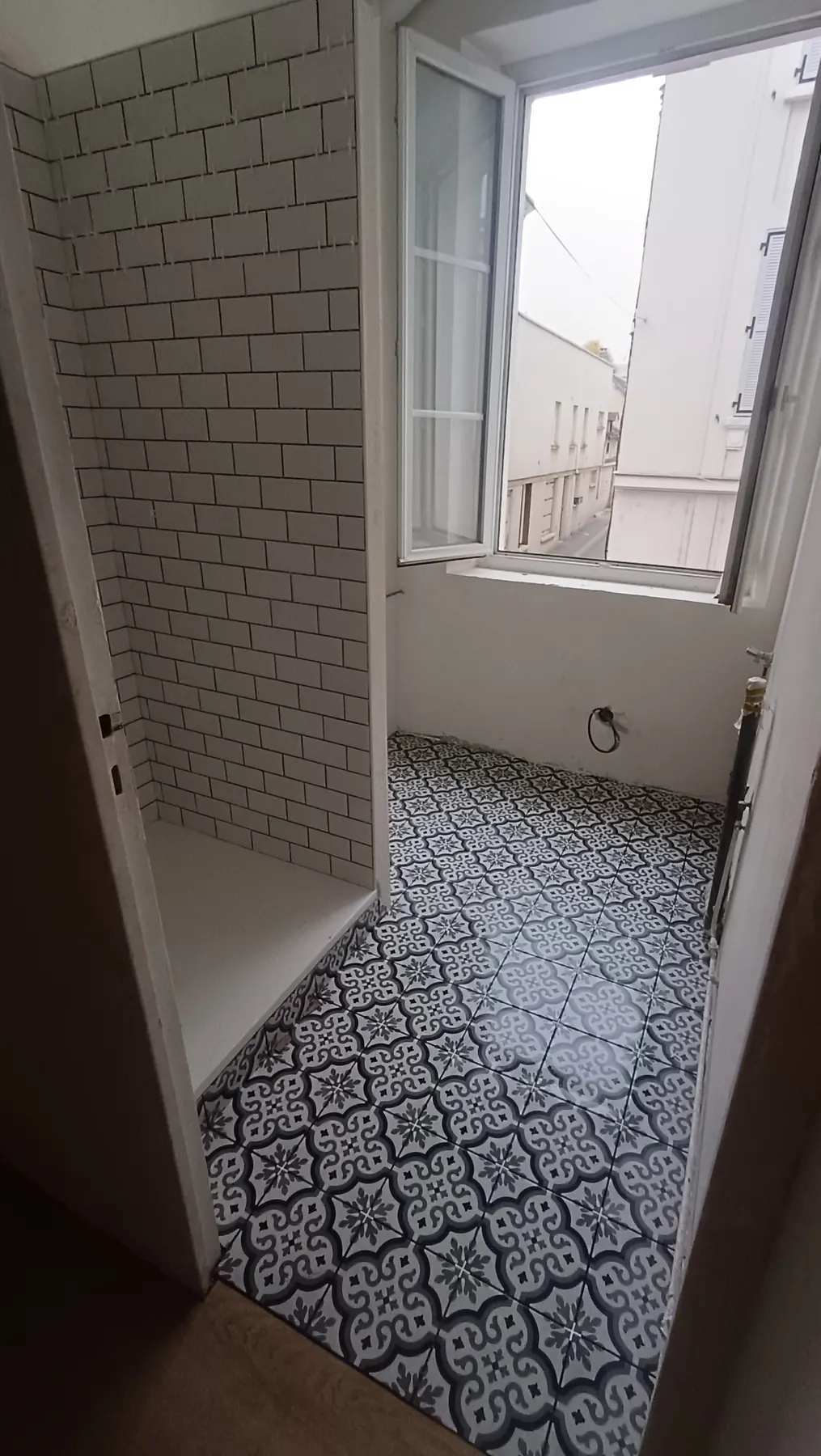
The starting point is decisive: a row cut mid-pattern against the door is noticed at once. Allow a margin for cuts and breakages, larger with a pattern to match, and take all the tiles from the same batch. We prepare this plan before laying, for floor tiling as well as for wall tiling and splashbacks, around Louviers, across the Eure, in Paris and throughout Île-de-France.
Frequently asked questions
Can cement tiles be used in a walk-in shower?
We advise against it. A shower floor stays wet and collects soap and limescale, and limescale only really comes off with acidic products, which cement tiles cannot take. Sealing limits staining, but it makes the tile neither waterproof nor acid-resistant. To keep the pattern in the shower, cement-look porcelain with an anti-slip finish is the safest solution.
How can you tell a true cement tile from a look-alike?
Turn a tile over: a true cement tile shows a grey mortar backing, and its edge reveals a coloured layer a few millimetres thick. It is also thicker and heavier. A porcelain look-alike has a ceramic back, often ribbed, and a pattern on the surface only. The product data sheet also states it.
Can an old cement-tile floor be restored?
Often, yes. Dull or stained old tiles can be cleaned, ground back to a sound surface, then sealed again. Broken tiles are replaced with salvaged pieces or new ones made to the same pattern, although the shade is rarely identical. First of all, the tiles must be checked for adhesion: tiles that sound hollow over a large area call for more substantial repairs.
Which grout colour suits white metro tiles?
It depends on the effect you want. White or very pale grey grout blends the tiles into one bright surface. A mid grey shows dirt less in a kitchen or a shower. Charcoal or black grout draws a graphic grid but highlights every irregularity in the laying. Do a test: cement grout often dries lighter than it looks when applied.
Can zellige be laid on a floor?
We advise against it in rooms with foot traffic. Its glaze is thin and its edges fragile: under footsteps, chair legs and grit from shoes, it scratches, wears and chips. On a small, lightly used floor it remains possible if you accept a quick patina. For a floor, zellige-effect porcelain reproduces the look with the strength of a floor tile.