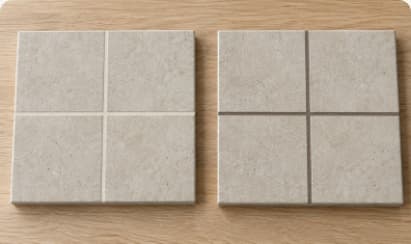
Inspiration
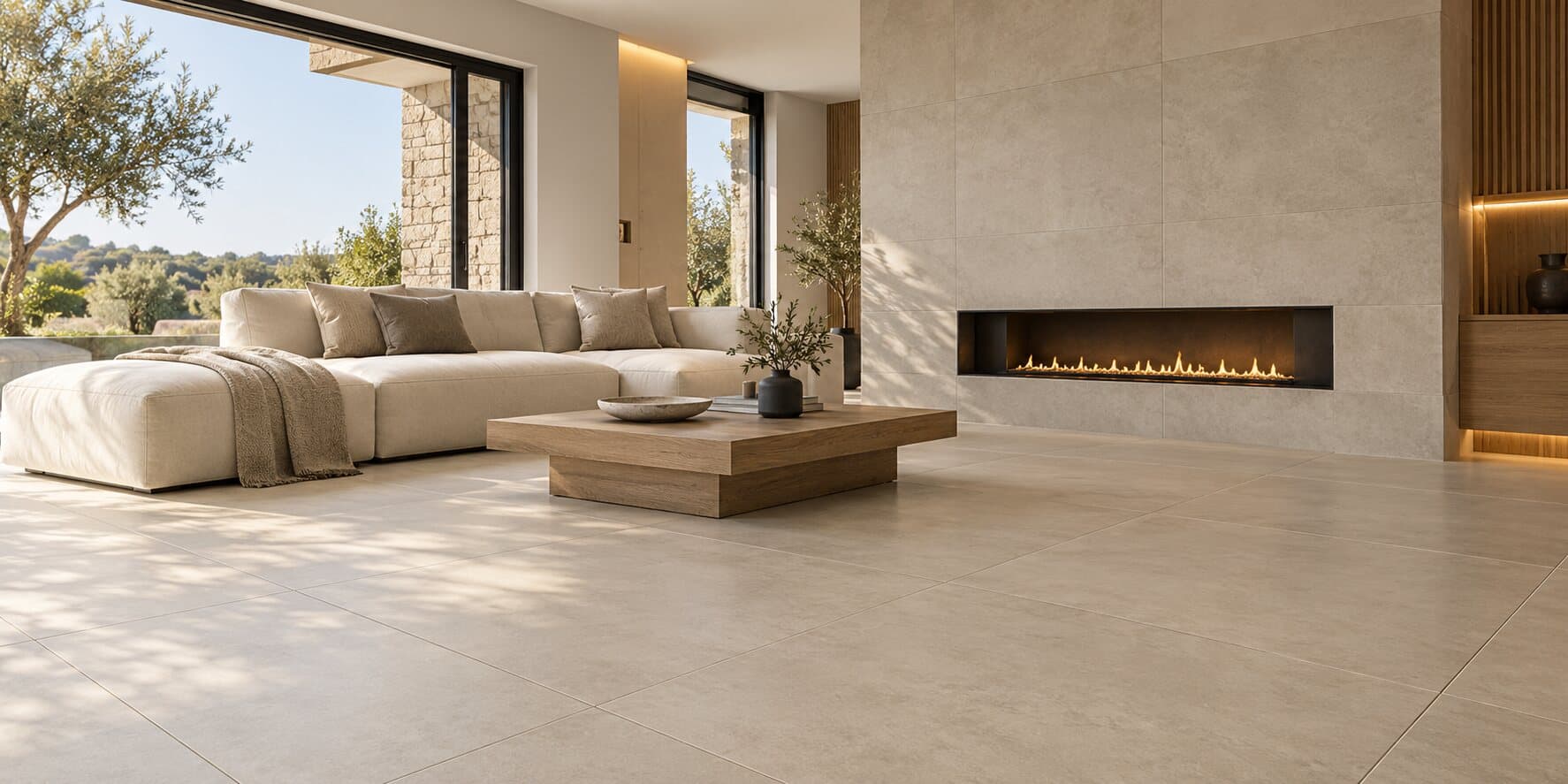
Stone-effect tiles: ideas for a warm interior
Natural shades, textures and pairings with wood: find inspiration to create a simple, welcoming space.
Natural stone
Period building entrance, bathroom, staircase or living room: we lay marble and natural stone with respect for the nature of each rock, from the choice of adhesive to the final sealer, so the stone develops a fine patina over the years.
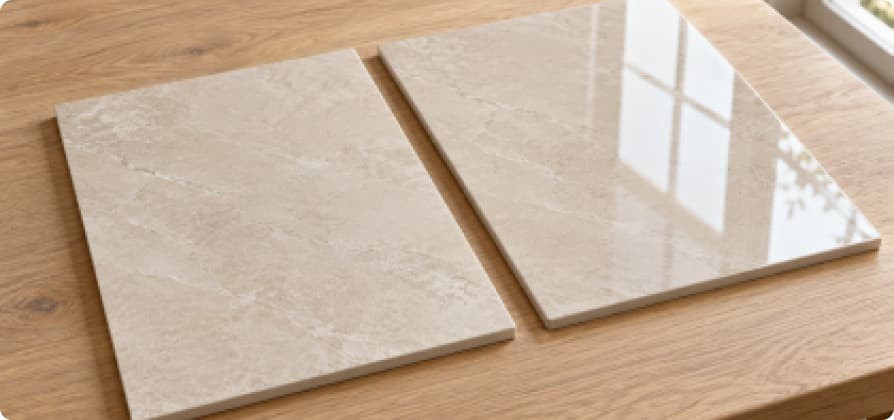
At a glance
Marble and natural stone installation means fixing slabs of rock (marble, granite, travertine, limestone, slate) to floors, walls or stairs, bonded with adhesive or bedded in mortar depending on their thickness. Each stone has its own hardness, porosity and sensitivity to acids: the adhesive, joints, finish and protection are all chosen to suit it.
We lay stone in living areas, entrances, bathrooms and on staircases, in period apartment renovations as well as new builds, in Paris, Évreux and the surrounding areas. We will also tell you frankly when marble-look porcelain would suit the way you live better.
Materials
The term natural stone covers very different rocks. Their hardness and how they react to water and acids decide where they belong in the home.
Limestone transformed by heat and pressure, it offers veining and depth that nothing quite matches. It scratches more easily than porcelain and reacts to acids (lemon, vinegar, wine, descaler), which dull its surface.
A very hard igneous rock with low porosity, it stands up well to wear and to most household products. Used polished or honed indoors, it is given a flamed or bush-hammered finish outdoors for grip.
A limestone formed around hot springs, recognisable by its natural holes. Filled (holes closed at the factory or during grouting), it gives a smooth floor; unfilled and tumbled, it has a more rustic look that needs more upkeep.
Ranging from soft to hard, it has light tones that brighten interiors. Dense limestones can take the traffic of an entrance; the more porous ones stain quickly and must be sealed as soon as they are laid.
A dark, layered rock with a riven finish (a natural, slightly uneven surface) or a honed one. It should be chosen in a grade that does not flake and protected against grease stains.
The alternative when a room is exposed to acids, water or heavy traffic: it reproduces marble veining, comes in very large formats, is unaffected by lemon juice or limescale and needs no sealing.
Our method
Stone is less forgiving than ceramic tiles: every step takes account of the rock, its thickness and its finish.
Depending on the room, we suggest a suitable stone and finish: polished for walls and dry rooms; honed, brushed or tumbled for floors; never polished on a shower floor. We check the thickness, calibration and consistency of the batch.
The substrate must be flat, dry, clean and rigid: a springy timber floor is not suitable for stone without reinforcement. Levelling compound, primer or an uncoupling mat as needed; in bathrooms, a waterproofing layer goes under the covering.
The slabs are unpacked, mixed and laid out dry to spread the veining, shades and any flaws evenly. Together we decide where the finest pieces, the cuts, the thresholds and the stair nosings go.
Calibrated stones are bonded with back-buttering, using a white adhesive for light stones and a fast-setting or reactive one for stones that are sensitive to water. Thick or uncalibrated stones are bedded in mortar. Lippage is checked slab by slab.
Fine but never zero, the joints are filled with a grout that is compatible with the stone, in a similar shade. On porous or tumbled stone, a first coat of sealer before grouting stops the grout from staining the surface.
Where needed, the floor is ground on site by machine with progressively finer diamond abrasives, to remove slight lippage and then achieve the finish you want, from honed to polished. Once the stone is dry, we apply a water- and oil-repellent impregnating sealer suited to the rock.
Tell us which stone you have in mind, the room and the surface area: we will advise you on the finish and the installation, then arrange a visit and a free quote.
Tools
Stone calls for clean cuts, frequent checks and careful hand finishing.
Good practice
Our stone installations follow the trade’s reference documents and the data specific to each rock.
Your questions
Polished marble shows off the veining and the light, but it reveals scratches and marks and becomes slippery when wet, so we keep it for dry rooms and walls. Honed marble, matt and soft to the touch, ages better underfoot and suits entrances as well as bathrooms. A honed floor can be polished later on, and the other way round.
Yes, with a suitable stone and a non-polished finish on the floor. The substrate is waterproofed, and the stone is sealed and cleaned without acidic limescale removers, which attack marble. In a shower used every day with hard water, marble-look porcelain is still easier to live with.
Some light marbles and limestones are slightly translucent or absorb water from the adhesive, so a grey mortar can show through or leave damp-looking patches. A white adhesive, often fast-setting, reduces that risk. For a few water-sensitive stones, such as some green marbles that can warp, we use a reactive adhesive that contains no water.
No. An impregnating sealer soaks into the stone without forming a film: it limits how much water and grease the stone absorbs and gives you time to wipe up a spill. It does not protect against acids, which etch the surface of marble and limestone, or against scratches. It wears off with traffic and cleaning, so it is renewed according to use, following the manufacturer’s instructions.
With lukewarm water, a pH-neutral cleaner made for stone and a well-wrung microfibre mop. Never use vinegar, lemon, descalers, bleach or abrasive powders. Wipe up acidic or greasy spills quickly, put a mat at the entrance to catch the grit that scratches stone, and fit felt pads under furniture.
Yes, and it is one of natural stone’s strengths. Dull etch marks left by acids and light scratches can be removed by honing and repolishing, either locally or across the whole floor, by machine with diamond abrasives. A deep stain in a porous stone is harder to remove, so prevention remains the best protection.
Marble gives you a one-of-a-kind floor, a material with real depth and the option of repolishing it over the years. Marble-look porcelain is unaffected by acids and stains, comes in very large formats and needs no treatment, which makes it the better fit for kitchens, showers and anyone who wants minimal upkeep. We compare both with you, samples in hand.
Our other services
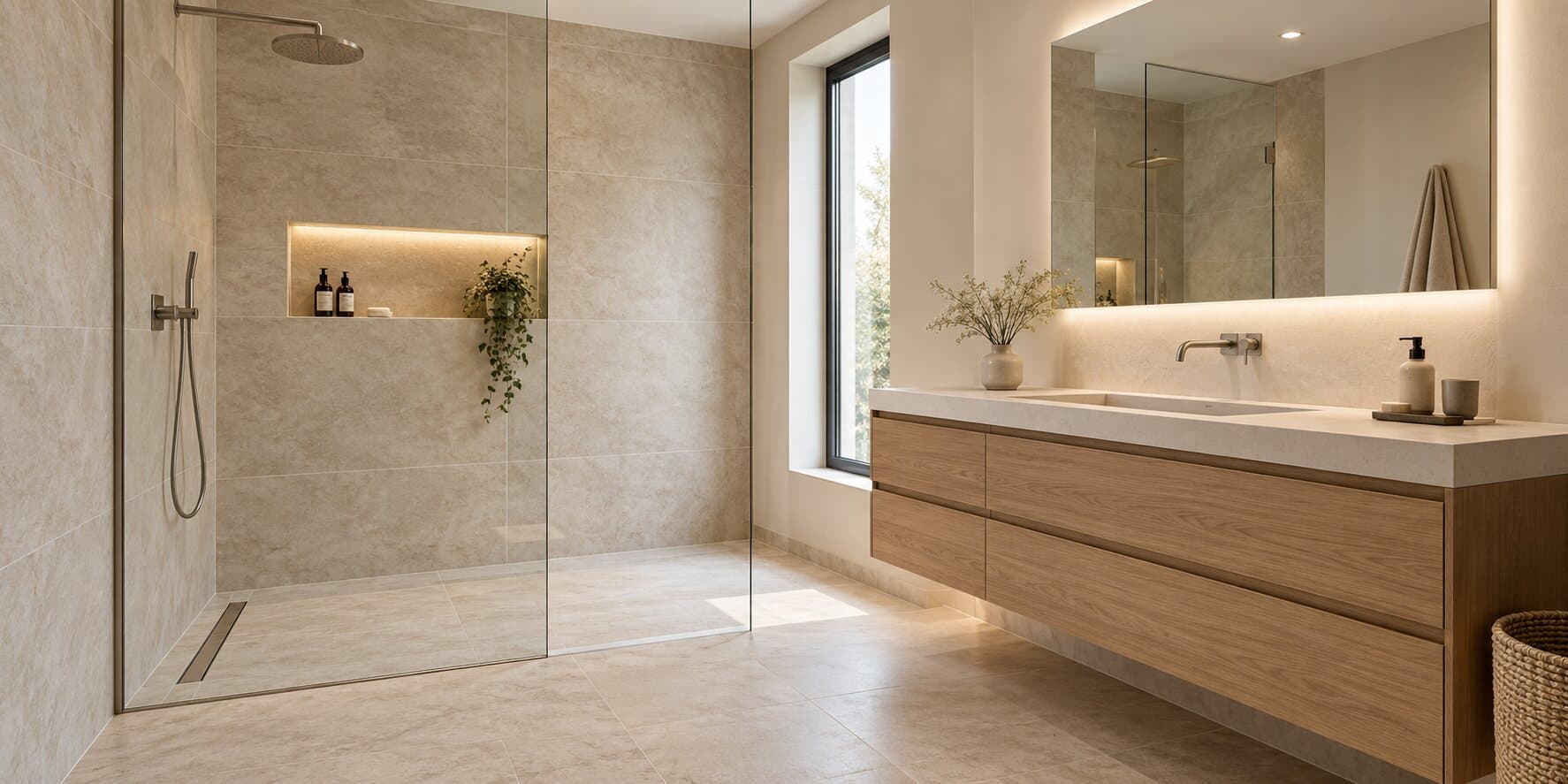
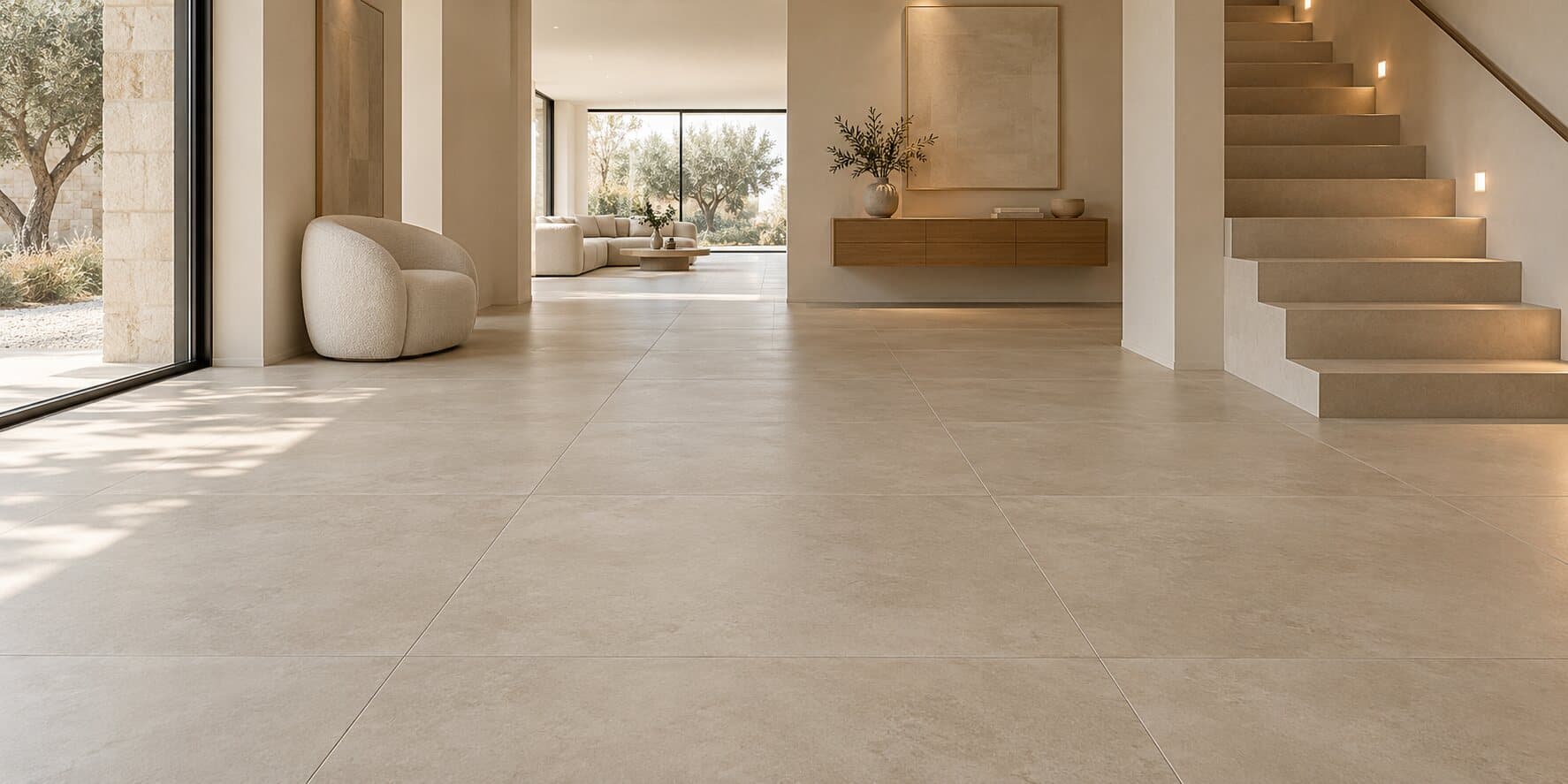
Inspiration
Natural shades, textures and pairings with wood: find inspiration to create a simple, welcoming space.
Choosing your tiles
Light, look and maintenance: discover the differences between these finishes to choose the one that suits your room.