Inspiration
Stone-effect tiles: ideas for a warm interior
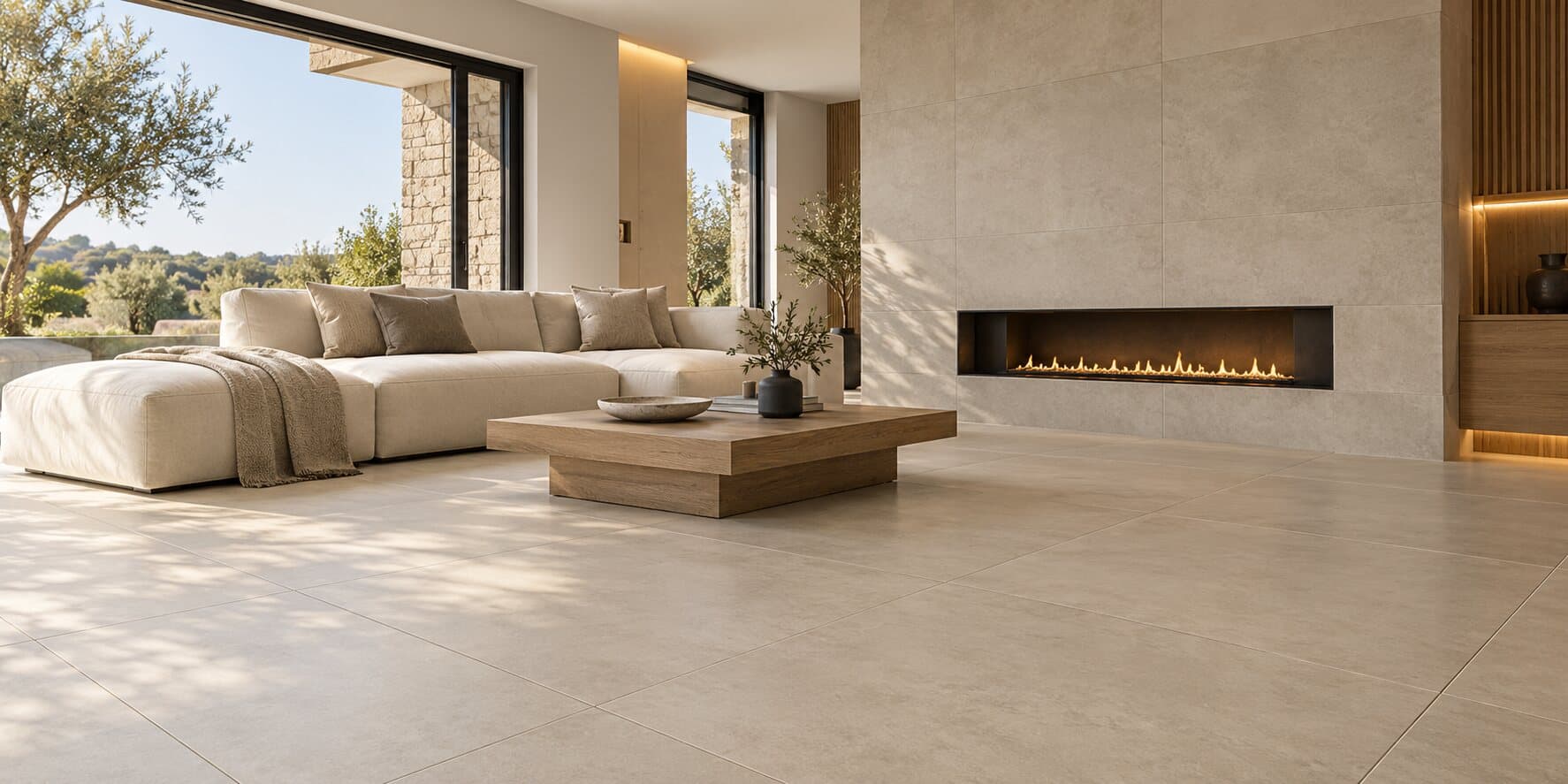
Stone-effect tiles combine the softness of natural materials with the easy upkeep of porcelain stoneware. Here are a few ideas for using them in your home and creating a warm atmosphere.
Why choose a stone effect?
Limestone, travertine, slate: porcelain stoneware tiles now reproduce the shades and textures of many stones. Unlike natural stone, they generally need no regular protective treatment and resist stains and wear well. They also work very well with underfloor heating, which is a real comfort in winter.
For a natural look, choose a range that offers several different faces. When laying, we mix tiles from several boxes to avoid obvious repeats.
Size matters too: large slabs suggest contemporary paving, while smaller formats, or a modular layout combining several sizes, recall traditional stone floors.
Pair colours and materials
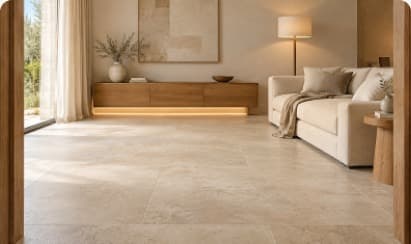
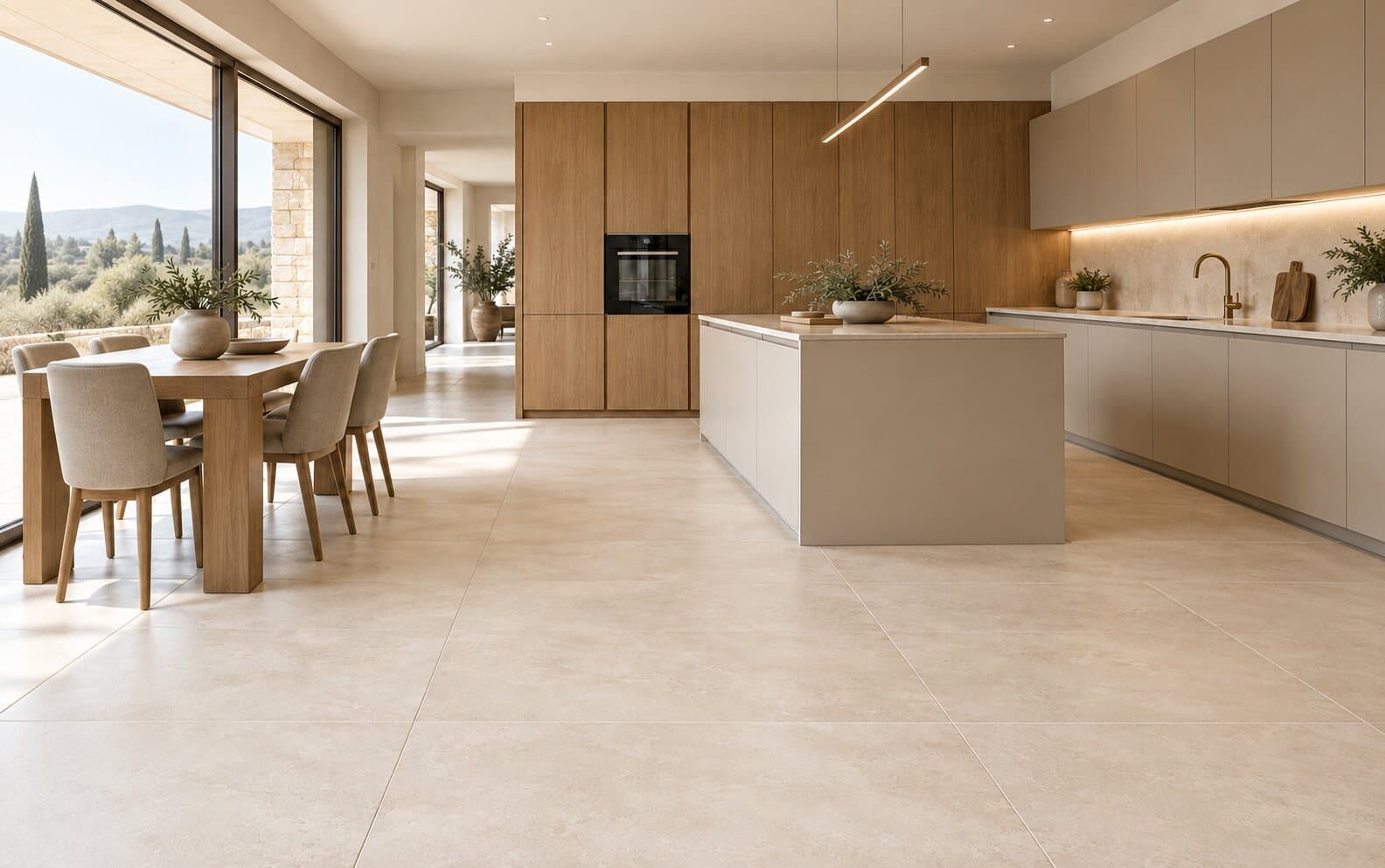
Cream, sand or greige tones create a bright, soothing base that suits most rooms. They go naturally with:
- light or oiled wood, for furniture or a wooden floor in an adjoining room;
- linen, wool and softly coloured textiles;
- off-white walls, lime paint or a mineral-look plaster;
- a few touches of black metal or brass.
A deeper stone tone, such as warm grey or taupe, gives character to an entrance or a living room, especially when balanced by light walls. In a kitchen, a light stone effect pairs well with wooden or sage-green units; in a bathroom, it creates a calm atmosphere, particularly if it also covers the shower wall.
From indoors to outdoors
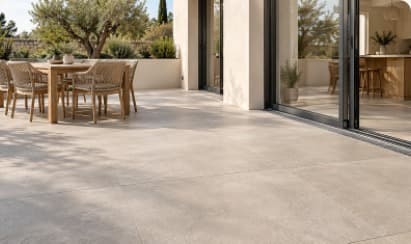
Many collections come in both an indoor version and an anti-slip outdoor version. You can extend the living room floor out onto the terrace in the same shade, for a seamless effect that works particularly well when the patio doors are open.
To achieve this continuity, the indoor and terrace floor levels are planned in advance, along with the patio door threshold and outdoor drainage. Bear in mind that the outdoor version may look slightly different, as its anti-slip surface catches the light differently: compare both samples side by side.
Finally, think about the finish: a matt or lightly textured surface enhances the natural look of stone. Compare your samples in the room, in daylight and next to your existing materials.