Choosing your tiles
Matt or gloss tiles: which finish should you choose?
Even with the same design, the finish changes a tile’s character a great deal. Matt, satin or gloss: each one reacts differently to light, foot traffic and cleaning. Here is how we help you decide.
Light and look
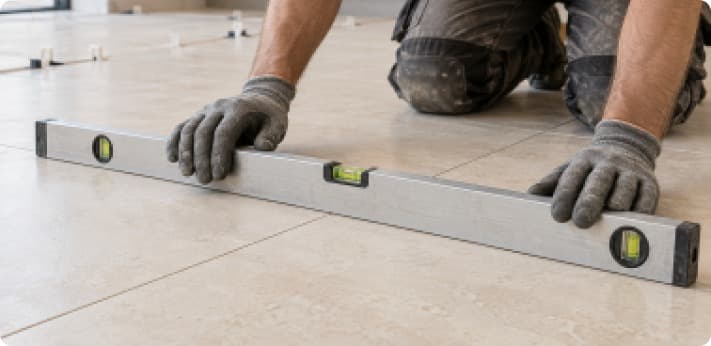
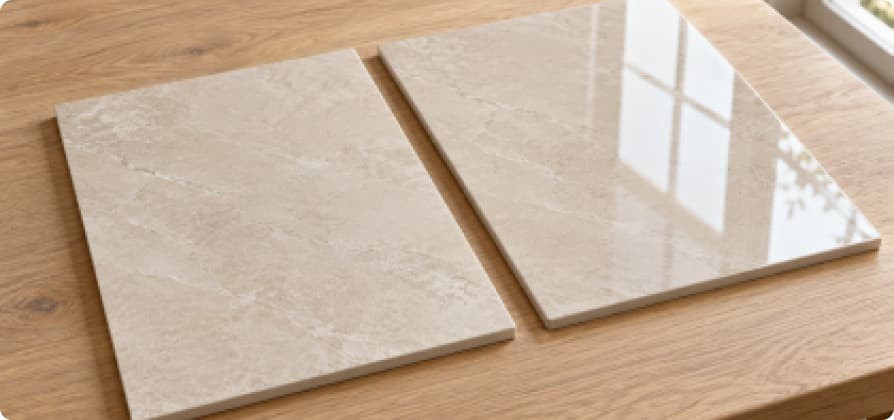
A gloss finish, also called polished, reflects light. It gives depth to marble effects and can brighten a hallway or a room with little sunlight. On the other hand, every reflection highlights the slightest unevenness in the substrate or the installation.
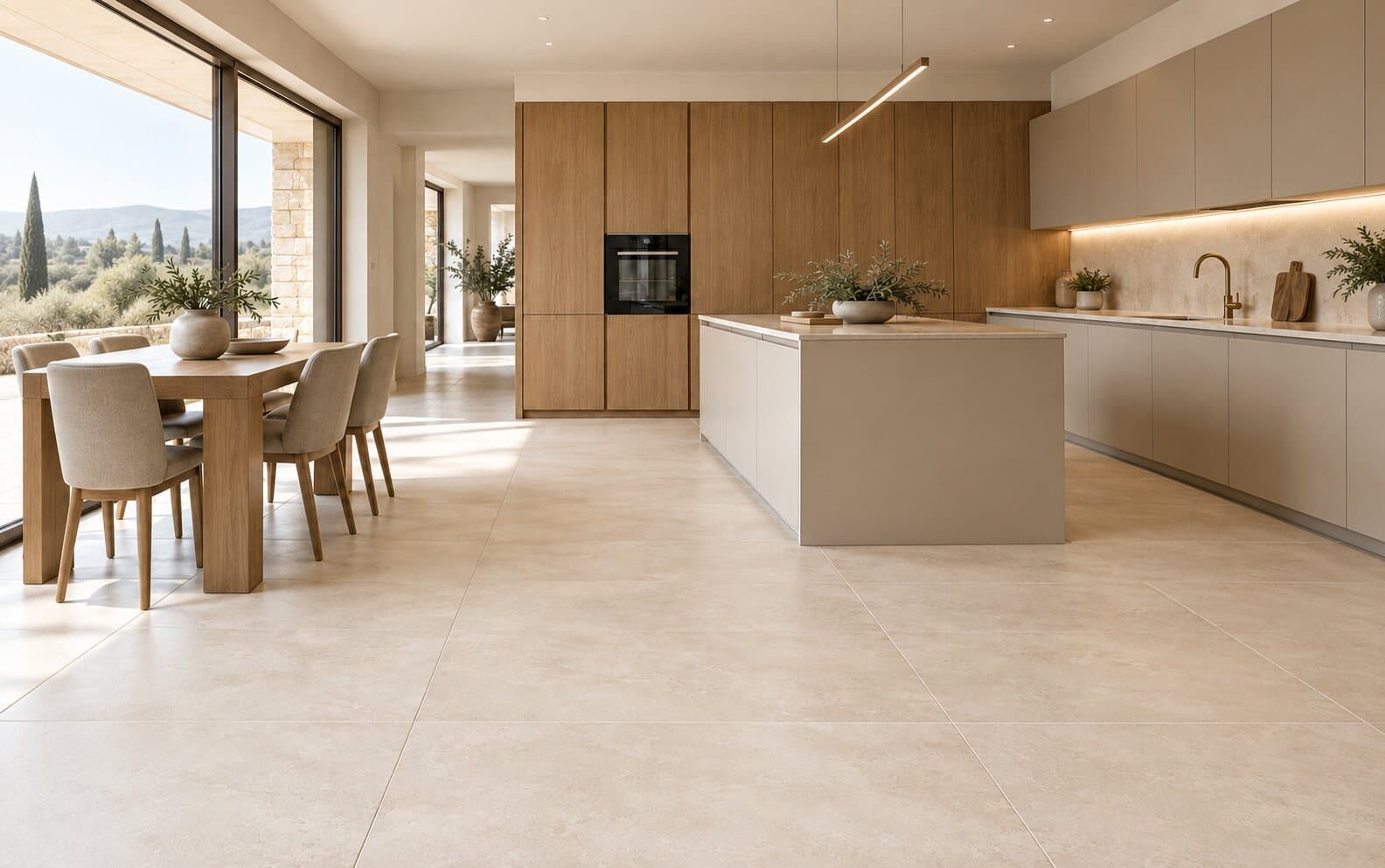
A matt finish absorbs more light. It looks softer and more natural, close to stone or concrete. In between, satin or semi-polished finishes offer a subtle sheen without a mirror effect.
Colour comes into play as well. On dark tiles, gloss accentuates reflections and depth; on light tiles, it mainly adds to the feeling of brightness. To judge the real effect, look at a sample in raking light, close to a window.
Use and safety
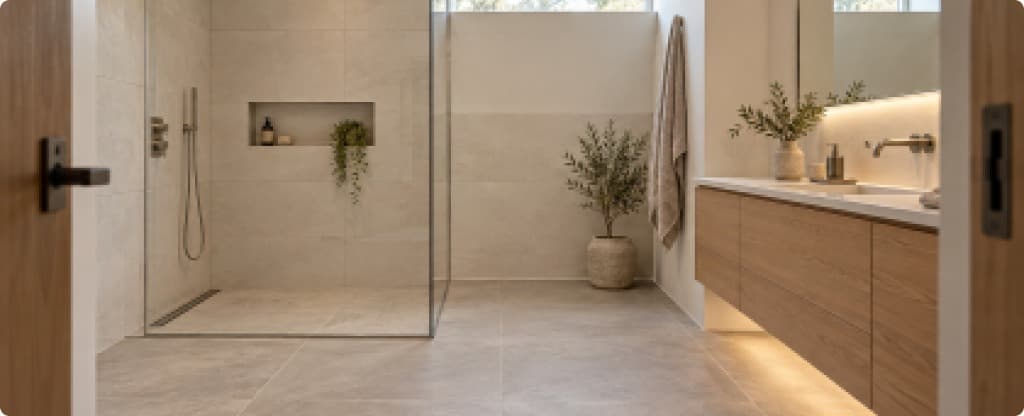
On floors, slip resistance is essential. A glossy surface becomes more slippery when wet, so we tend to keep it for dry rooms or walls. In a bathroom, an entrance or a kitchen, a matt or lightly textured finish with a suitable rating such as R10 makes everyday life safer.
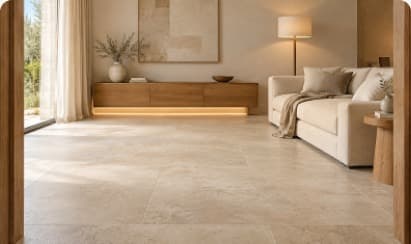
In a living room, the question is different: a dry room can take a satin or polished floor, as long as you accept a little more care day to day, especially near the entrance. On walls, the constraint disappears: glossy wall tiles can bring a splashback or a shower to life with complete peace of mind.
Everyday maintenance
The two finishes need different care:
- gloss is easy to clean but shows water marks, footprints and fine scratches;
- matt hides everyday marks better;
- a heavily textured surface can hold more dirt and may need scrubbing.
In every case, follow the manufacturer’s recommendations and avoid harsh or waxy products. For daily cleaning, a slightly damp microfibre mop is often enough.
A polished marble effect and a matt stone or concrete effect tell different stories. Choose the atmosphere you want first, then check that the finish suits how the room is used. The simplest approach is still to compare two samples side by side, in the room itself, at different times of day.