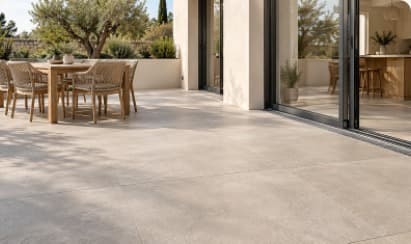
Outdoors
Terrace tiles: the questions to ask yourself
Exposure, maintenance and finish: prepare your choice of outdoor flooring for a space that suits your daily life.
Outdoor tiling
Ground-level terrace, balcony, path or steps: we help you choose a frost-resistant, slip-resistant covering, then the installation method that suits your substrate, for an outdoor floor that comes through the winters without lifting.
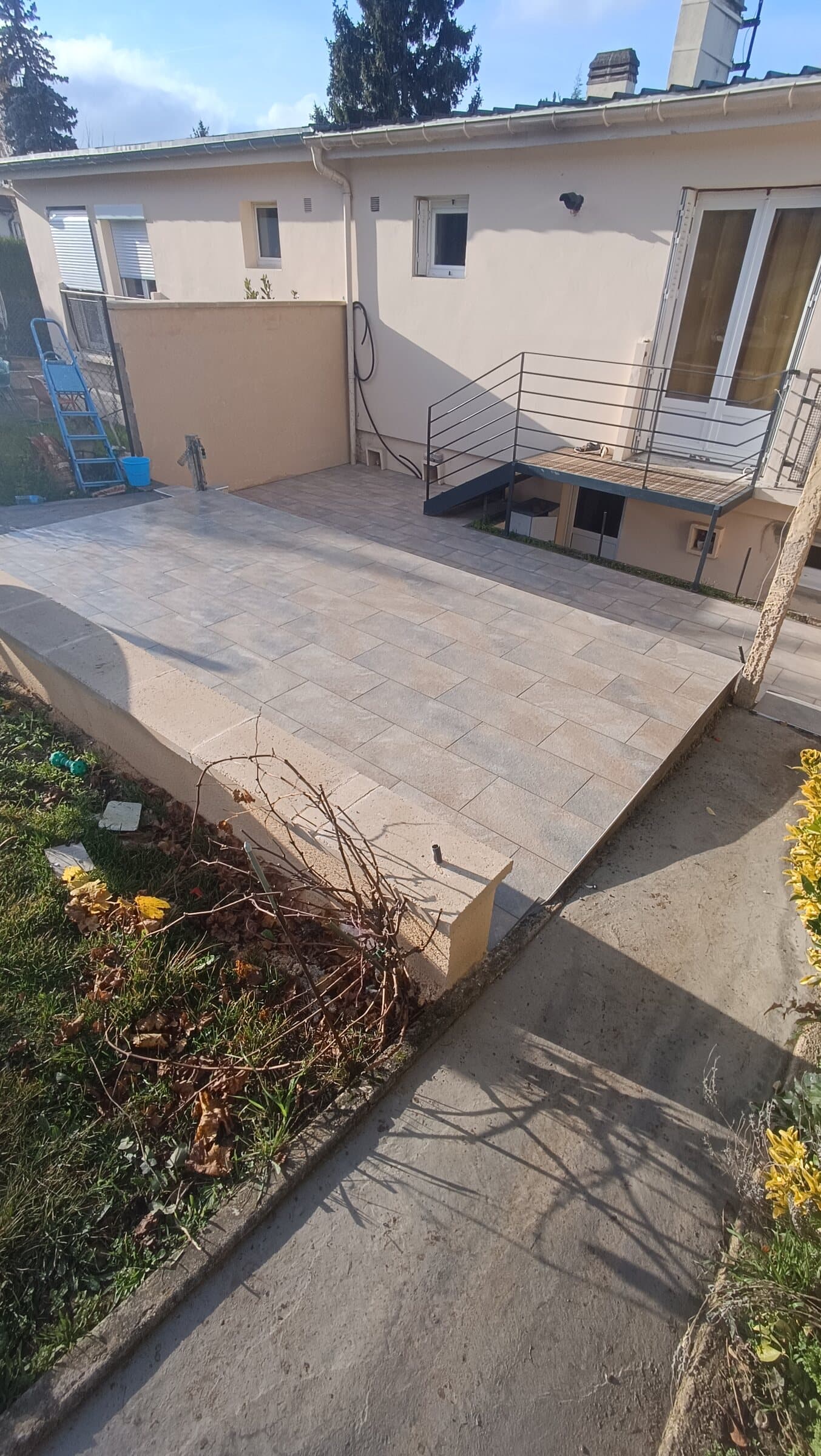
At a glance
Terrace tiling means covering an outdoor floor (terrace, balcony, path, steps) with tiles or pavers that withstand frost and stay slip resistant in the rain. They are bonded to a sloping concrete slab, laid on pedestals over a waterproofing layer or bedded in mortar. How well they last depends above all on drainage, void-free adhesive coverage and movement joints.
We look at the substrate, the exposure and how the space is used before choosing the material and the method, for houses as well as apartment balconies, in Paris, Évreux and the surrounding areas.
Materials
Outdoors, a floor covering has to cope with frost, rain, sun and wide temperature swings. The tile matters, but everything underneath it matters just as much.
The standard choice for bonded installation: its very low water absorption (0.5% at most for porcelain) and the frost resistance declared by the manufacturer protect it from freezing. We choose a textured surface with a suitable slip rating.
Thick and rigid, they can be laid on adjustable pedestals, on a compacted gravel bed or bonded. Laid dry, they need no adhesive or cement grout: water runs through the gaps and drains away across the surface below.
Flamed granite, hard limestone, slate or travertine: chosen from grades whose frost resistance is confirmed by the supplier, in a non-polished finish. More porous than porcelain, stone is usually protected with an impregnating sealer.
An improved cement-based adhesive (class C2), usually deformable (S1), and a grout rated for outdoor use: these products are designed to cope with freeze-thaw cycles and the expansion of the tiles in the sun.
On a balcony or loggia, a liquid waterproofing system (SEL) under the tiles, applied within the scope of its Avis Technique (French technical approval), protects the structure. On a cracked substrate, an outdoor-rated uncoupling mat limits how much movement reaches the tiles.
Stair nosings, outdoor skirting, edge trims with a drip and threshold channel drains: these pieces protect the edges, lead water away from the walls and give steps and terrace edges a finished look.
Our method
A long-lasting terrace starts with water that drains away and tiles that are free to expand without lifting.
We measure the existing falls and note which way the water runs, the height available under the patio door sill, the joints in the slab, any inspection chambers and whether there is a room beneath the terrace.
Bonded tiles on a sound concrete slab, 20 mm pavers on pedestals over waterproofing or stabilised ground, or a mortar bed for a path or an uneven base: we explain why we recommend one rather than another.
Slab repairs and cleaning, a sloping screed if the existing surface is flat or falls the wrong way, and waterproofing where it is needed. The fall, around 1.5 to 2%, is built into the substrate and never into the adhesive bed.
We mark out the movement joints, carry the slab’s expansion joints through the tiling, and plan the cuts around inspection chambers, the starting line at the threshold and the setting out of the steps before mixing any adhesive.
We tile in dry weather with no frost forecast, within the temperature range stated for the products (often about 5 to 30 °C). Tiles are back-buttered so that no void is left for water to freeze in; pavers on pedestals are adjusted one by one.
Outdoor grout, movement joints and a perimeter joint filled with a suitable sealant, then stair nosings, skirting and edge trims. The surface is protected from rain while it cures; at handover we check the drainage with you.
Send us a few photos of the surface, its dimensions and the height under the patio door: we will arrange a visit and a free quote.
Tools
Equipment chosen for setting falls, cutting thick pavers and working outdoors.
Good practice
Outdoors, the requirements go further than indoors: we follow the trade’s reference documents and the manufacturers’ recommendations.
Your questions
Bonded tiling suits a sound concrete slab that already has a fall: it gives a rigid, continuous floor with filled joints. Pavers 20 mm thick on pedestals are the better option over waterproofing, on an uneven base or when you want to keep access to pipes and cables: the joints stay open and water drains underneath. They do need a few centimetres of height below the door sill.
Allow around 1.5 to 2% as a rule, which is 1.5 to 2 cm per metre, running away from the house. A shallower fall leaves puddles that freeze in winter and encourage moss. The fall is built into the slab or a screed, never by adding more adhesive. With pavers on pedestals, it is the surface under the pedestals that carries the fall.
Yes, under certain conditions. In a French co-ownership building, the balcony is often a common part reserved for your private use: check the building rules and get the necessary approval before work starts. We then check the fall, the drainage, the height under the patio door and the added weight. Depending on the layout, waterproofing goes under the tiles, and the edge gets a trim that keeps water off the facade.
Yes, when the weather allows. Adhesives and grouts are used within a temperature range set by the manufacturer, often about 5 to 30 °C, on a dry, unfrozen substrate, with no rain or frost forecast while they set. In winter we wait for suitable days; in summer we avoid full sun, which dries the adhesive too quickly.
Usually one of these causes is involved: tiles that are not frost resistant, incomplete adhesive coverage leaving voids where water freezes, too little fall, an adhesive not suited to outdoor use, or missing movement and perimeter joints. With nowhere to go, the covering eventually lifts as temperatures change. On a renovation, we find the cause before re-laying, or the problem comes back.
Porcelain needs no treatment: sweeping and rinsing with clean water is usually enough, with a suitable cleaner for grease stains. Cement grout can be given a water-repellent treatment so it stains less, and natural stone is protected with an impregnating sealer. Avoid using a pressure washer too close to the joints: over time it hollows them out.
Our other services
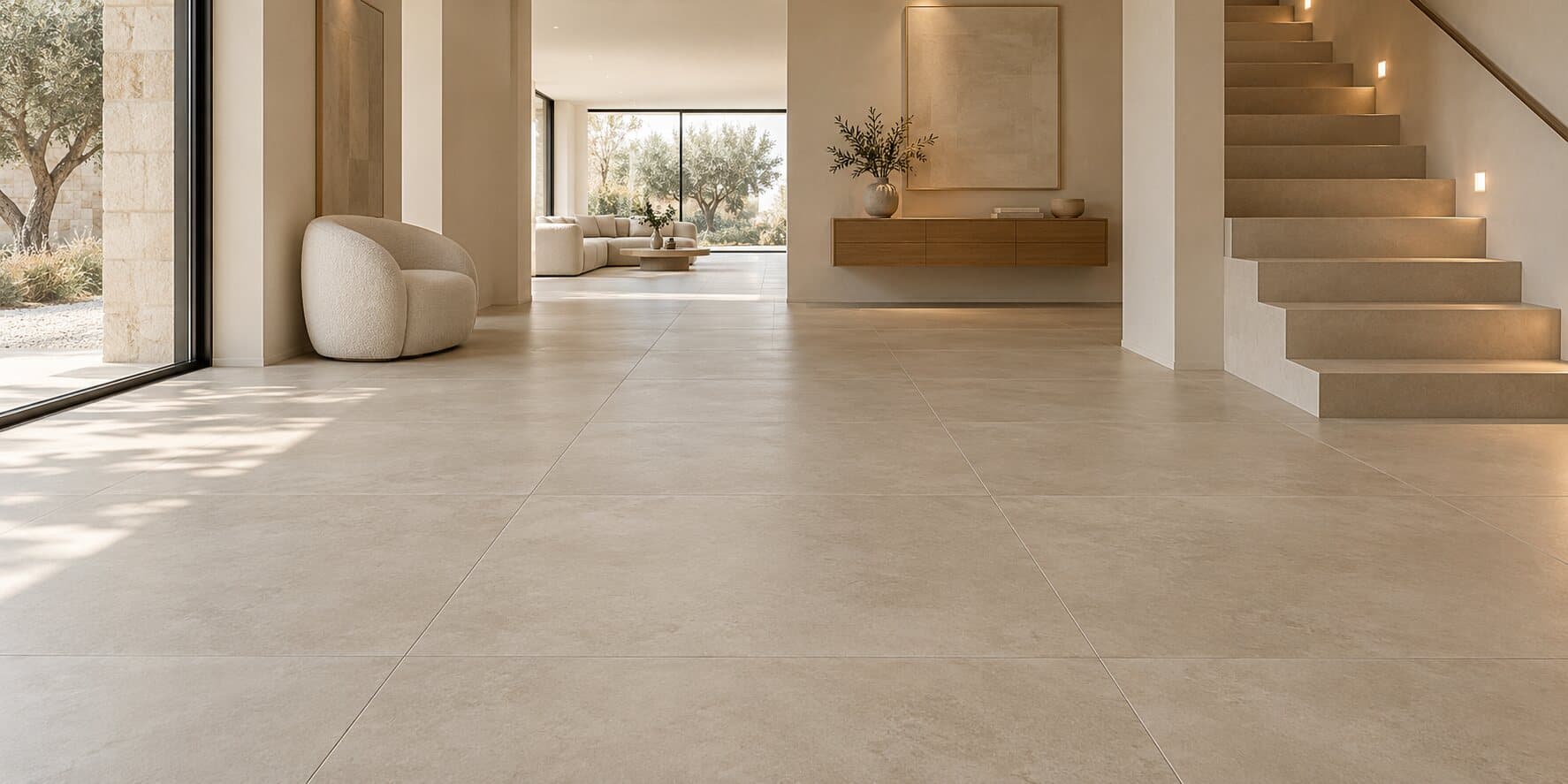
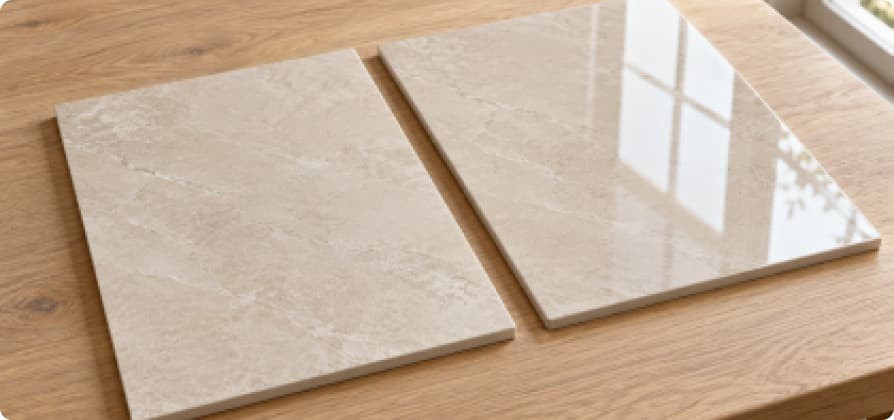
 AI-edited image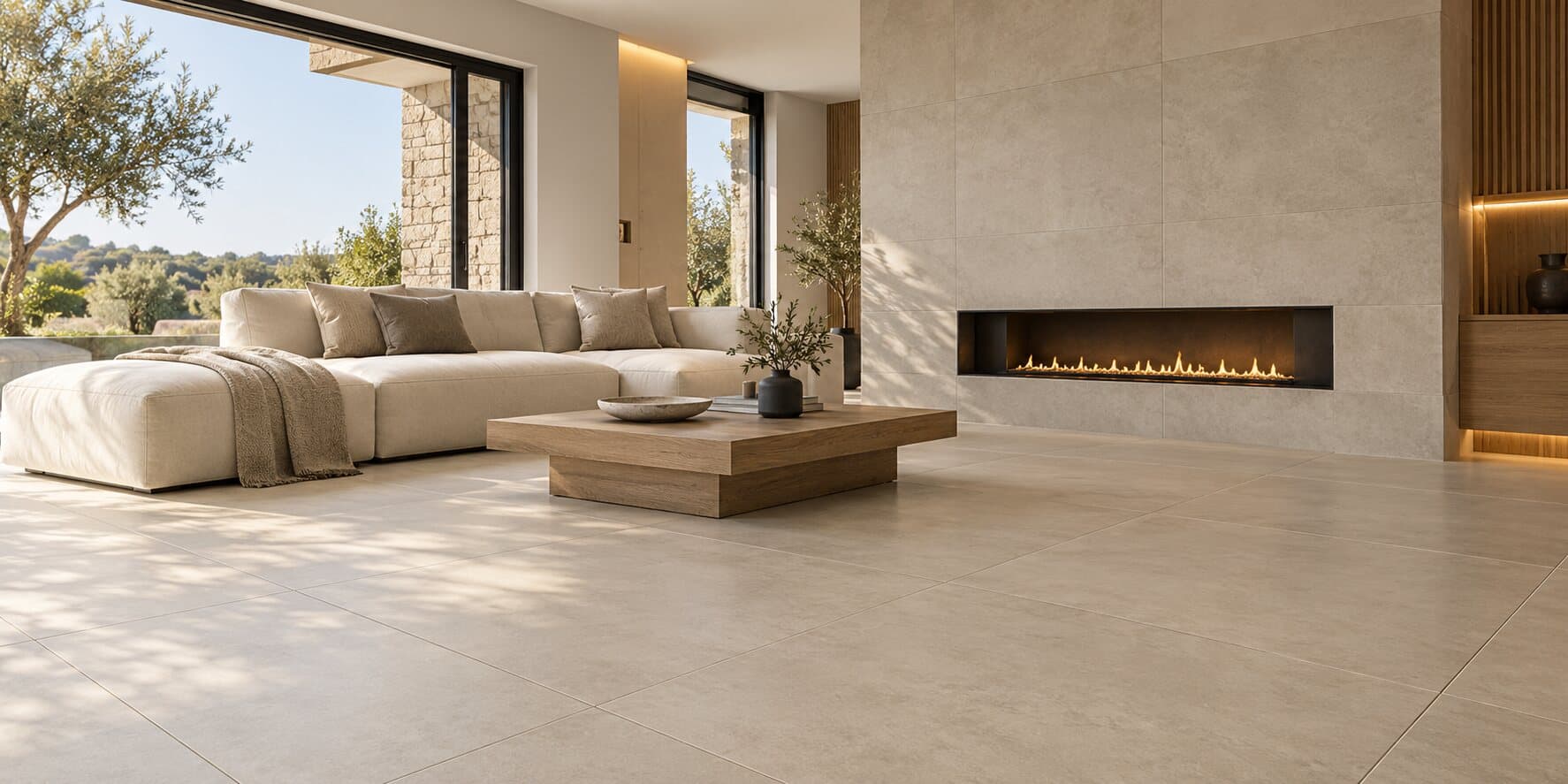
Outdoors
Exposure, maintenance and finish: prepare your choice of outdoor flooring for a space that suits your daily life.
Inspiration
Natural shades, textures and pairings with wood: find inspiration to create a simple, welcoming space.
Planning your project
Surface area, condition of the substrate, preferred tile size: gather the details that help you present your project to a tiler.