Bathroom
Which tiles should you choose for a bathroom?
A bathroom is a small room that works hard: water, steam, cleaning products, bare feet. Here are the points we go through with you to choose tiles that are pleasant to live with and suited to these demands.
Treat the floor, walls and shower separately
Each surface in a bathroom has its own constraints. On the floor, we favour porcelain stoneware: it absorbs very little water, stands up well to wear and copes with everyday cleaning products. On the walls, the choice is wider, and ceramic wall tiles can work away from the most exposed areas.
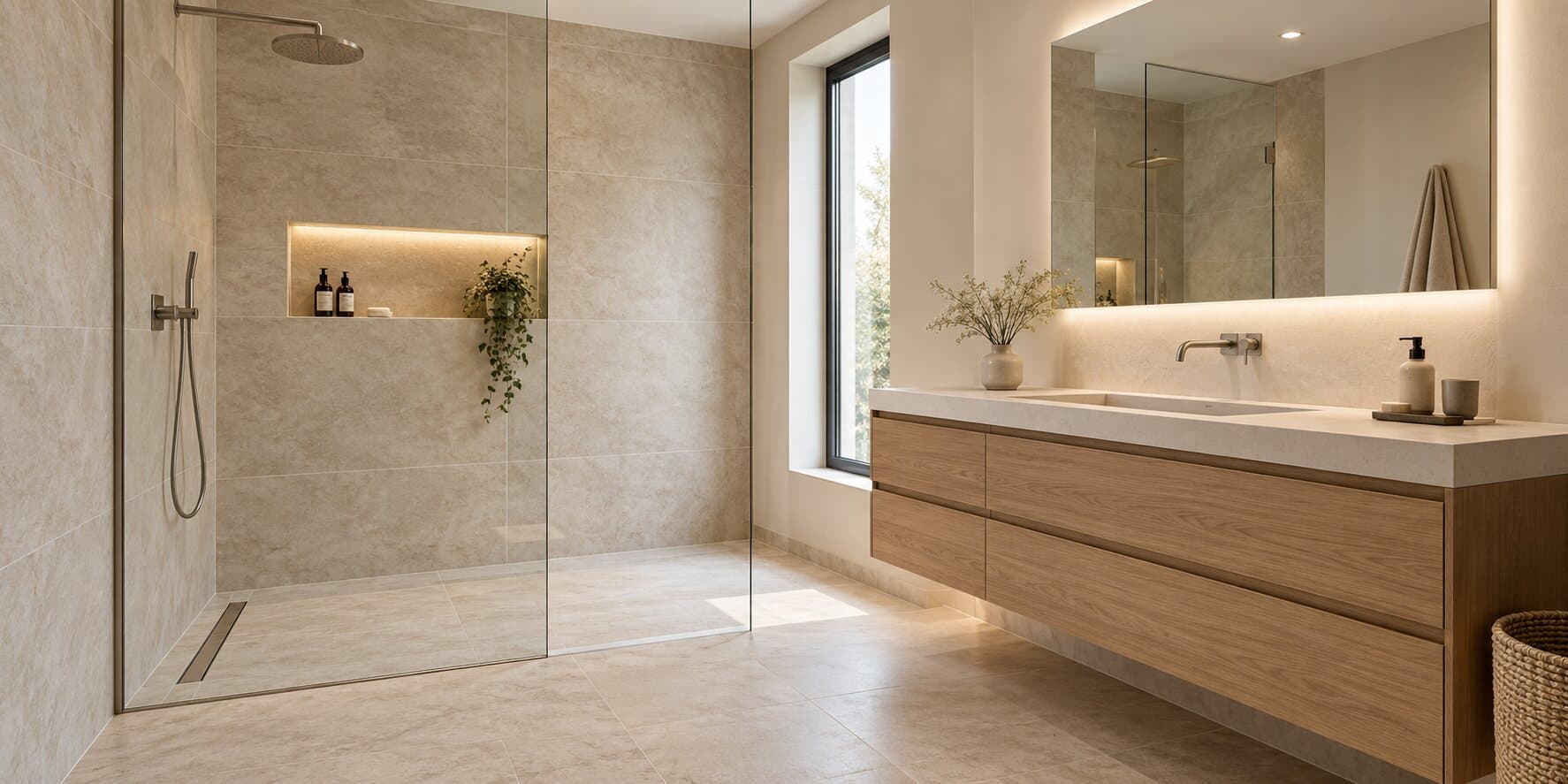
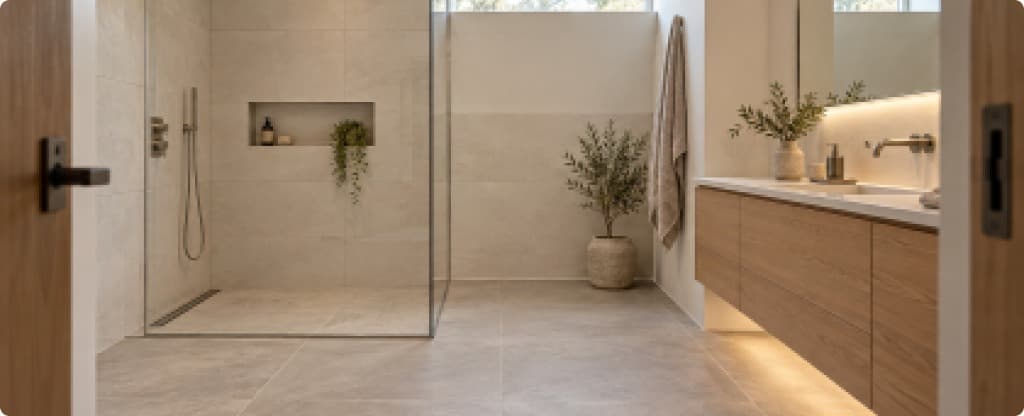
The shower area needs particular care, especially for a walk-in shower. Before tiling, the substrate receives a waterproofing system, and the floor is laid with a gentle slope towards the drain. The tiles then cover an assembly that is already watertight.
In the shower, we usually tile the walls up to the ceiling, or at least above the shower head. A built-in niche, tiled in the same design, keeps bottles tidy without adding a shelf.
Think about safety and comfort
In a room where you walk barefoot on wet floors, slip resistance matters as much as looks. Manufacturers’ data sheets give a rating, such as R10 or R11, or a class A, B or C for barefoot areas. For a level-access shower floor, we recommend a suitable anti-slip finish.
The tile size plays a part too:
- small formats and mosaics follow the slope of a shower easily, and their many grout lines improve grip;
- large formats reduce grout lines and make the room look bigger, with a linear drain in the shower so the floor can slope in a single plane;
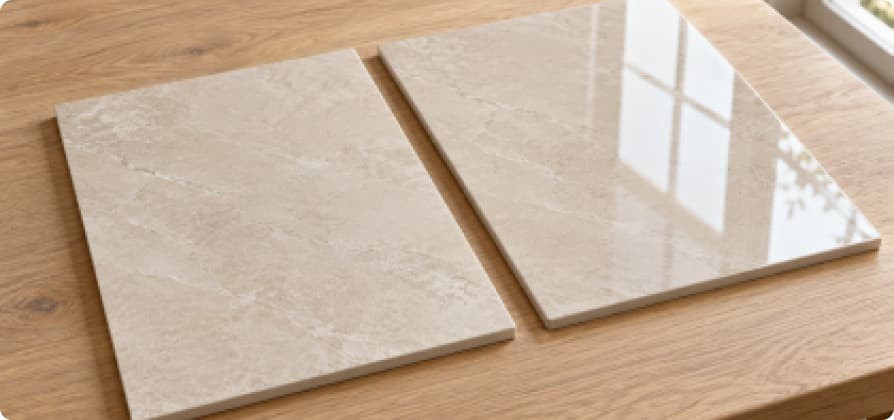
- a matt or lightly textured finish is safer underfoot than a glossy one.
Choose an atmosphere that is easy to look after
Light, natural shades make the space feel larger and go well with wood as well as black or brass fittings. Bear in mind that hard water leaves more visible marks on very dark or glossy surfaces.
In a small bathroom, using the same tiles on the floor and walls, with aligned joints, creates a sense of unity and visually pushes back the edges of the room.
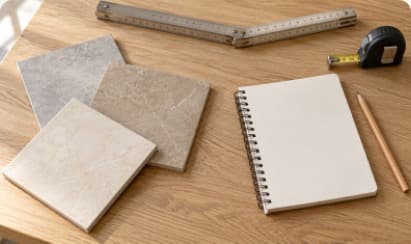
Think about the grout as well: in the shower, epoxy grout resists moisture and stains better than standard cement grout. Finally, look at your samples in the room itself, in its own light, and let’s talk about the best way to combine them.