Prices and budget
Parquet laying cost per m²: floating, glued or nailed
In France, laying parquet typically costs €25 to €40 per m² for a floating floor, €30 to €50 per m² glued and €45 to €65 per m² nailed, labour only. The parquet itself, the underlay, substrate preparation and skirting come on top.
These ranges are indicative averages observed in France in 2026 in published price guides, not our price list. The real price depends on the room, its substrate and the parquet chosen: only a quote drawn up after a site visit commits to an amount.
The installation method sets most of the labour cost, but the overall budget also depends on the parquet itself, floor preparation and finishing work. Here is how to read these figures and what they leave out.
Parquet laying prices in 2026
The three installation methods do not take the same time, tools or substrate preparation. The prices below are for labour; preparation items are listed separately, because not every job needs them.
| Item | Indicative range | What the price covers |
|---|---|---|
| Floating installation (engineered) | €25 to €40 per m² | Labour only, boards joined on an underlay; parquet and underlay excluded |
| Glued installation (solid or engineered) | €30 to €50 per m² | Labour only, fully glued to a prepared substrate; parquet excluded |
| Nailed installation (solid) | €45 to €65 per m² | Labour only, on battens or a timber floor; parquet excluded |
| Levelling compound, if needed | €15 to €35 per m² | Supplied and laid |
| Traditional screed, if the level must be corrected | €20 to €35 per m² | Supplied and laid, around 5 cm thick |
| Removing old tiles, if needed | €15 to €30 per m² | Labour only, rubble removal often extra |
The price of the parquet varies far more than the cost of laying it, depending on the species, the grade, the thickness of the wear layer and the finish: it is not part of these ranges, and neither are the underlay and the skirting.
Floating, glued or nailed: why the prices differ
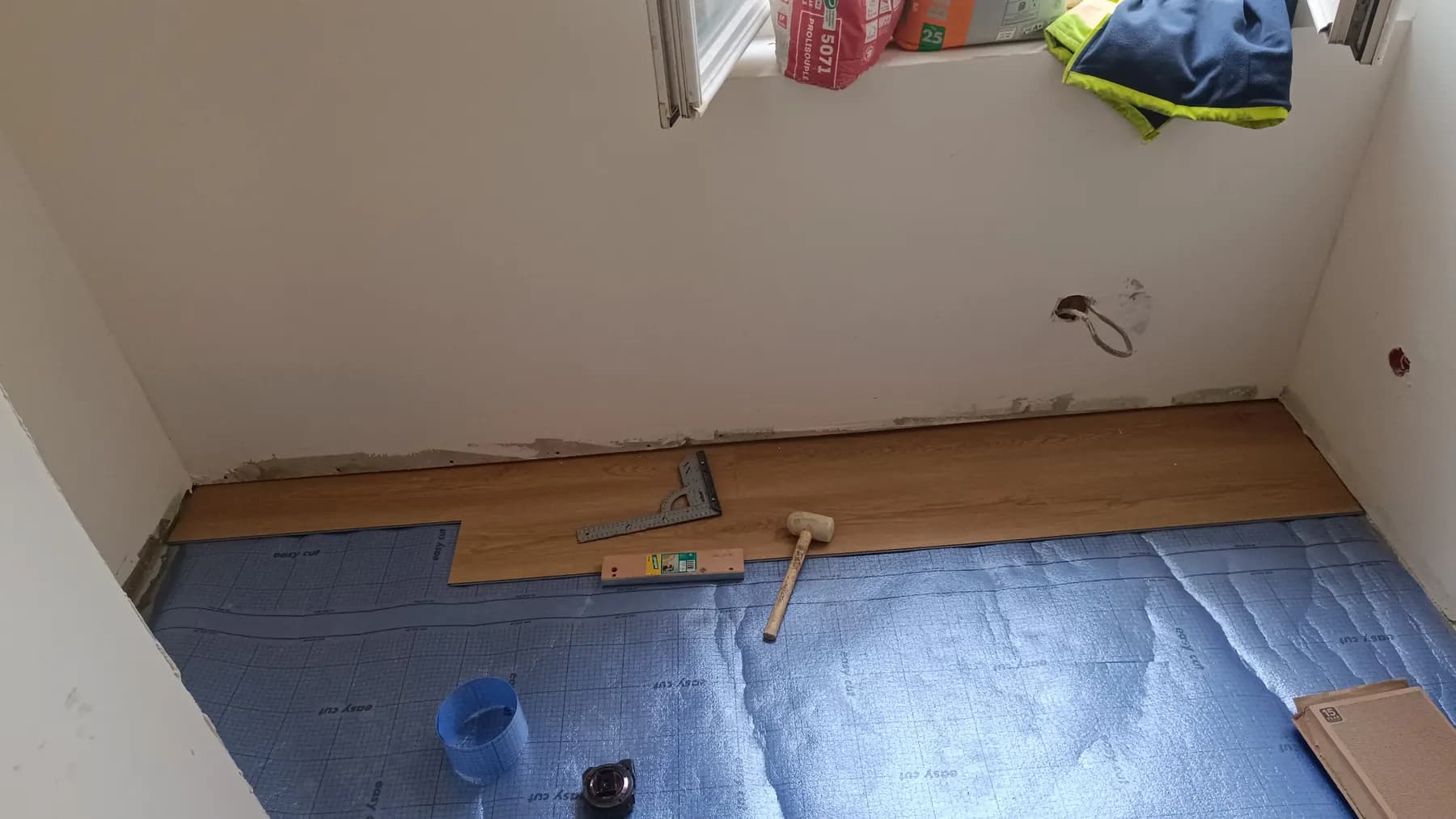
A floating installation is the quickest: engineered boards lock together on an underlay without being fixed to the substrate. It tolerates small irregularities and suits renovations well, but it sounds a little more hollow underfoot and needs a vapour barrier on a mineral substrate.
A glued installation bonds the parquet fully to a screed, a slab or a panel. It gives a stable, quiet floor, but it needs a flatter and drier substrate, a suitable adhesive and careful spreading: preparation and laying time both increase. It also works over underfloor heating, with parquet that its manufacturer declares suitable.
A nailed installation, on battens or an existing timber floor, is the traditional method for solid parquet, covered by the French standard NF DTU 51.1. Slower, it needs dedicated tools and the battens to be prepared, hence its higher range.
Solid, engineered or laminate: what you pay for
Solid parquet is nailed or glued and can be sanded several times over the decades. Engineered parquet, a hardwood wear layer on a more stable core, can be floated, glued and sometimes nailed: it is what makes the cheapest installation, a floating floor, possible. The price of the parquet itself mainly depends on:
- the species: oak leads the way for its hardness and stability, other species change the budget;
- the grade of the wood, with more or fewer knots, which affects the look as much as the price;
- the thickness of an engineered board’s wear layer, which sets how many times it can be sanded;
- the finish: factory lacquered or oiled, or unfinished, then sanded and finished on site after laying, which adds a stage of work.
Laminate flooring, often called laminate parquet, is not parquet: it is a printed pattern on a fibreboard panel under a protective layer. It is laid as a floating floor and cannot be sanded. The ranges in this article apply to real parquet; we do not give a separate figure for laminate.
Substrate preparation, underlay and acclimatisation
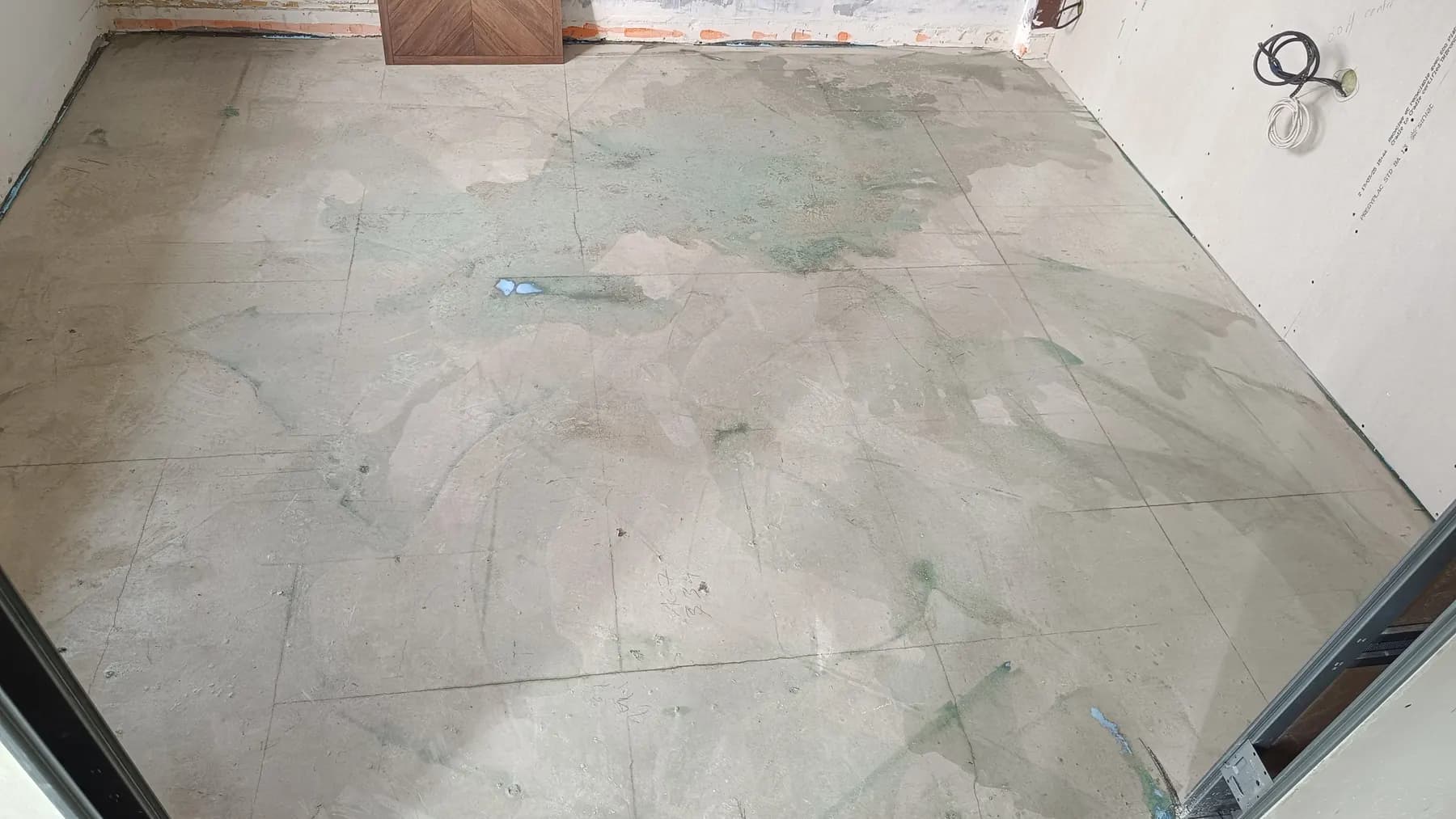
Wood does not cope well with a damp or uneven floor. Before laying, we check flatness with a straightedge and the residual moisture of a screed, for example with a carbide tester. If the substrate is out of tolerance, a levelling compound is added to the quote; if the level must be corrected by several centimetres, a screed is needed, along with its drying time. Our guide to screed and levelling costs covers these items.
With a floating floor, the underlay reduces impact noise and absorbs small irregularities; on a mineral substrate, a vapour barrier membrane protects the wood from moisture in the floor. Over underfloor heating, the underlay must have low thermal resistance. Neither is included in the laying prices.
Acclimatisation costs nothing, but it has to be planned: once wet trades are finished (plaster, paint, a dry screed), the packs stay in the room for the time set by the manufacturer, usually 48 hours or more.
Patterns, skirting and finishes: the extras
Herringbone (bâtons rompus) or chevron (point de Hongrie) costs significantly more than a straight layout: the pattern is set out from the room’s axis, each board is cut precisely and laying is slower. Price guides give no reliable average for these patterns: only a quote based on the room plan can price them.
Several finishing items are often priced separately:
- skirting boards, supplied and fitted, fixed to the wall and never to the parquet;
- threshold strips and transitions with the neighbouring rooms;
- undercutting doors and door casings;
- sanding and finishing unfinished parquet on site;
- moving furniture, if you ask us to.
Wood-effect tiles, an alternative worth comparing
In a kitchen, an entrance or a room exposed to water, wood-effect porcelain tiles are often the worry-free option. Laying them typically costs €35 to €55 per m² in a straight or staggered layout, and €45 to €65 per m² in herringbone or chevron, labour only, tiles excluded. Long planks need a very flat substrate, so a levelling compound is often added.
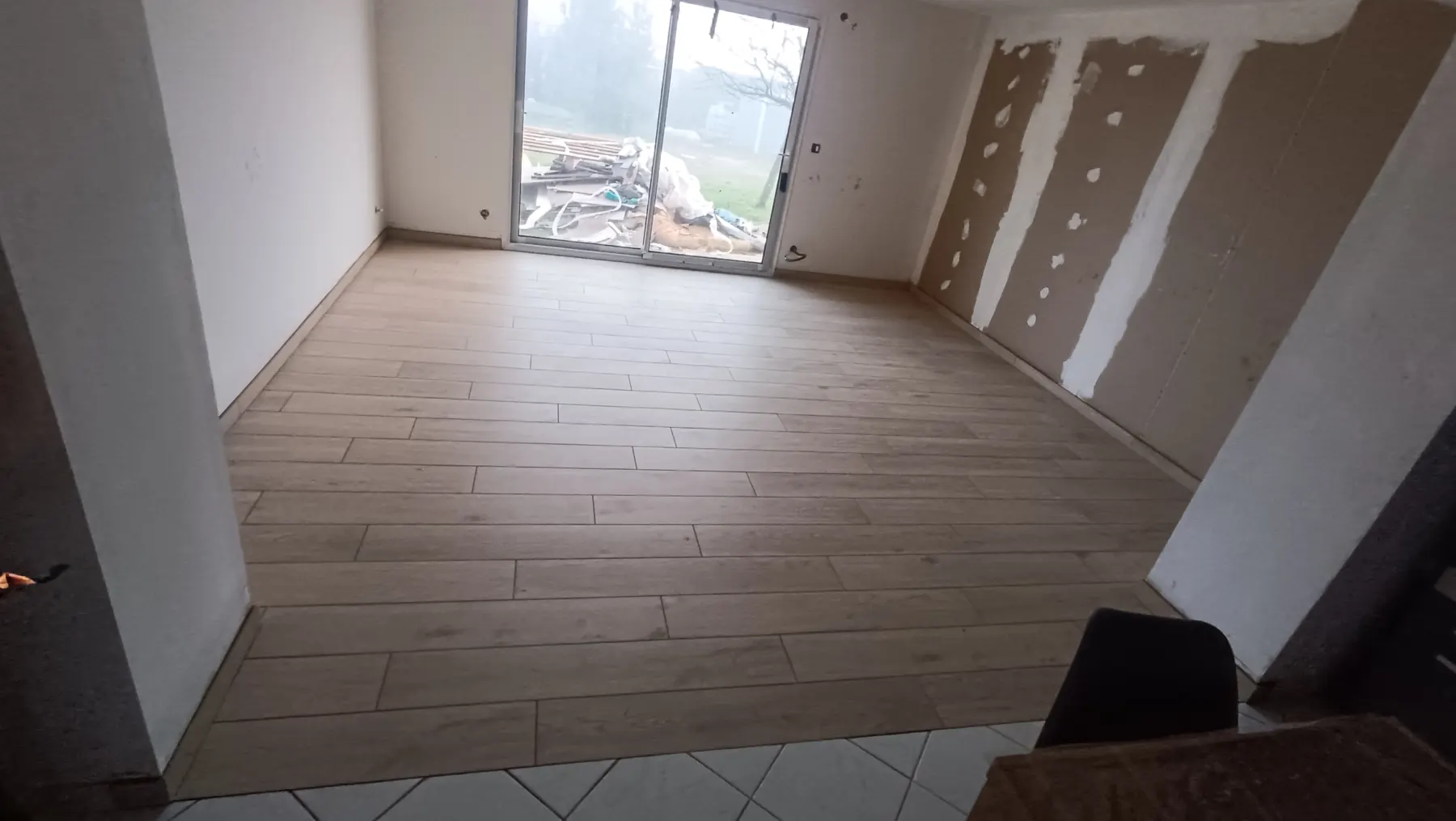
More expensive to lay than a floating parquet, they tolerate water, need little maintenance and work well over underfloor heating. Our article on laying wood-effect tiles covers the layout options, and our guide to tiling costs per m² covers the other formats.
Paris, Île-de-France and Évreux
Price guides put labour 20 to 30% higher in Paris and Île-de-France than in the provinces. With parquet, where laying is a large share of the budget excluding materials, the gap is clearly visible. Building constraints also play a part: heavy packs to carry up without a lift, working hours set by the co-ownership, sometimes an acoustic underlay required by the building rules.
Évreux and the Eure fall within the provincial price bracket. We provide parquet installation in the Eure as well as in Paris and Île-de-France, and we prepare the substrate ourselves when needed: one contact for the floor and its covering.
Reading a parquet laying quote
Compare quotes item by item. A clear quote states:
- the installation method and the parquet reference, with the area ordered, cuts included;
- who supplies the parquet, the underlay, the adhesive and the skirting;
- substrate preparation: moisture check, levelling compound, primer, vapour barrier;
- removal of the old floor covering and disposal of the waste;
- finishing: skirting, thresholds, undercutting doors, on-site finishing of unfinished parquet.
The most frequent exclusions are the supply of the parquet, removal, levelling and skirting. On VAT, renovation work on homes completed more than two years ago is charged at 10%, new builds at 20%; guides do not always say whether their prices include VAT. To prepare your request, see our article on the information to prepare for a tiling quote, whose advice applies just as well to parquet.
Frequently asked questions
Is floating installation always the cheapest?
On labour, yes, on average: €25 to €40 per m², against €30 to €50 per m² glued and €45 to €65 per m² nailed. You do, however, need to add the underlay and, on a mineral substrate, a vapour barrier. Gluing requires a flatter floor, so sometimes a levelling compound that a floating floor could have done without, but it gives a more stable floor that is quieter underfoot.
Does the laying price include the underlay and skirting?
Not in the average ranges, which cover labour only. The underlay, any vapour barrier, skirting, threshold strips and substrate preparation appear as separate lines, supplied by the tradesperson or by you. Check on the quote who supplies each item and whether fitting the skirting is included: two quotes can differ more on these points than on the price per m².
How much extra parquet should be ordered for cuts?
It depends on the room and the installation method. A straight layout in a rectangular room produces little waste; an irregular room, a diagonal layout or a chevron pattern produces more. We work out the quantity from the actual measurements and the layout plan, adding a margin for cuts and a few spare boards, which are useful for a future repair with the same batch.
Does laying parquet in a Paris flat cost more?
Generally, yes. Price guides put labour 20 to 30% higher in Paris and Île-de-France than in the provinces. Building constraints come on top: heavy packs to carry up without a lift, working hours set by the co-ownership, parking, and sometimes an acoustic underlay required by the building rules. These points are priced after the visit, depending on the building and the floor.
Is laminate cheaper to lay than parquet?
Laminate is laid as a floating floor, like floating engineered parquet, with no gluing or nailing. The price guides we consulted do not publish a reliable range specific to laminate, so we do not give one. Above all, remember that it is not parquet: it is a printed pattern on a fibreboard panel, which cannot be sanded and is replaced once worn.