Finishes & details
Which grout colour should you choose for your tiles?
Grout covers only a small area, yet it defines the whole grid of your tiling. Its colour can blend everything into one continuous surface or, on the contrary, outline each tile.
Tone on tone or contrast
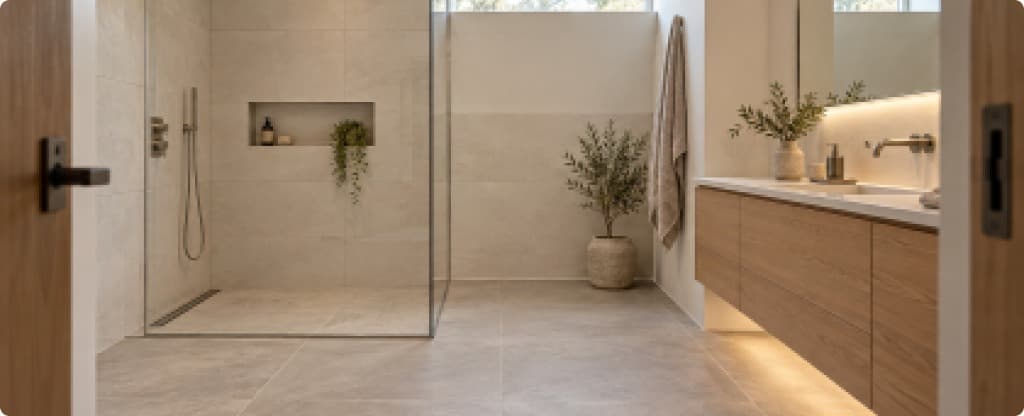
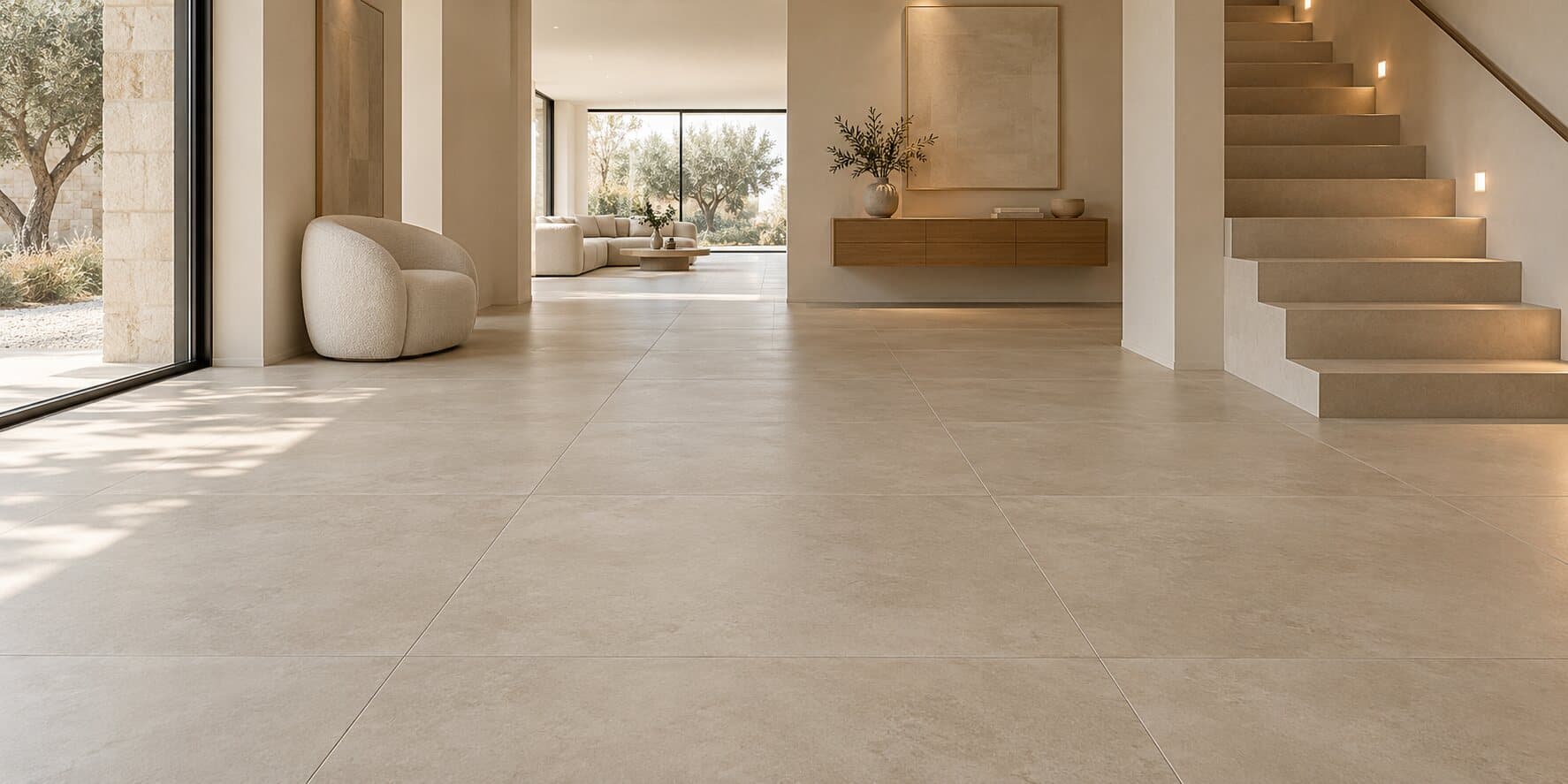
Grout close to the tile colour creates a uniform effect. We often recommend it for large formats and stone or marble effects: the surface looks calmer and the room feels larger. On floors, we match the shade to the dominant colour of the tile rather than to its veins or strongest variations.
Contrasting grout highlights the shape of the tiles and the laying pattern. It works well with metro tiles, herringbone or zellige, as long as you embrace that graphic look. On a metro tile splashback, white grout gives a soft, classic effect, while grey or charcoal grout draws a sharper grid. In between, a subtle contrast (one shade lighter or darker than the tile) is a safe choice.

Joint width and maintenance
Colour is not chosen in isolation. Rectified tiles, with perfectly straight edges, allow thin and therefore more discreet joints. Non-rectified or handmade-look tiles need wider joints, which will remain more visible.
Think about how the room is used as well. On floors, very light grout shows marks more quickly in high-traffic areas, and in a kitchen a mid-tone shade is more forgiving of splashes. Grey, greige or sand shades are often easier to live with.
Well-finished joints, full and smooth, are also easier to clean. Regular cleaning with a mild product is usually enough; a water-repellent treatment can add protection to cement grout in damp areas.
Cement or epoxy grout
The type of grout matters as much as the colour:
- cement grout is the most common, comes in a wide range of colours and suits most rooms;
- epoxy grout is watertight and highly stain resistant, which makes it a good option in a shower or on a worktop;
- epoxy is more technical to apply and sets quickly, so we prepare it carefully.
Bear in mind that cement grout often dries slightly lighter. To picture the result, place a tile sample on a grout colour chart, or ask us to do a small test on an offcut before you decide.