Outdoors
Terrace tiles: the questions to ask yourself
A terrace lives to the rhythm of the seasons: sun, rain, frost, furniture being moved around. Before choosing a design, a few simple questions help steer you towards tiles that are durable and pleasant to use.
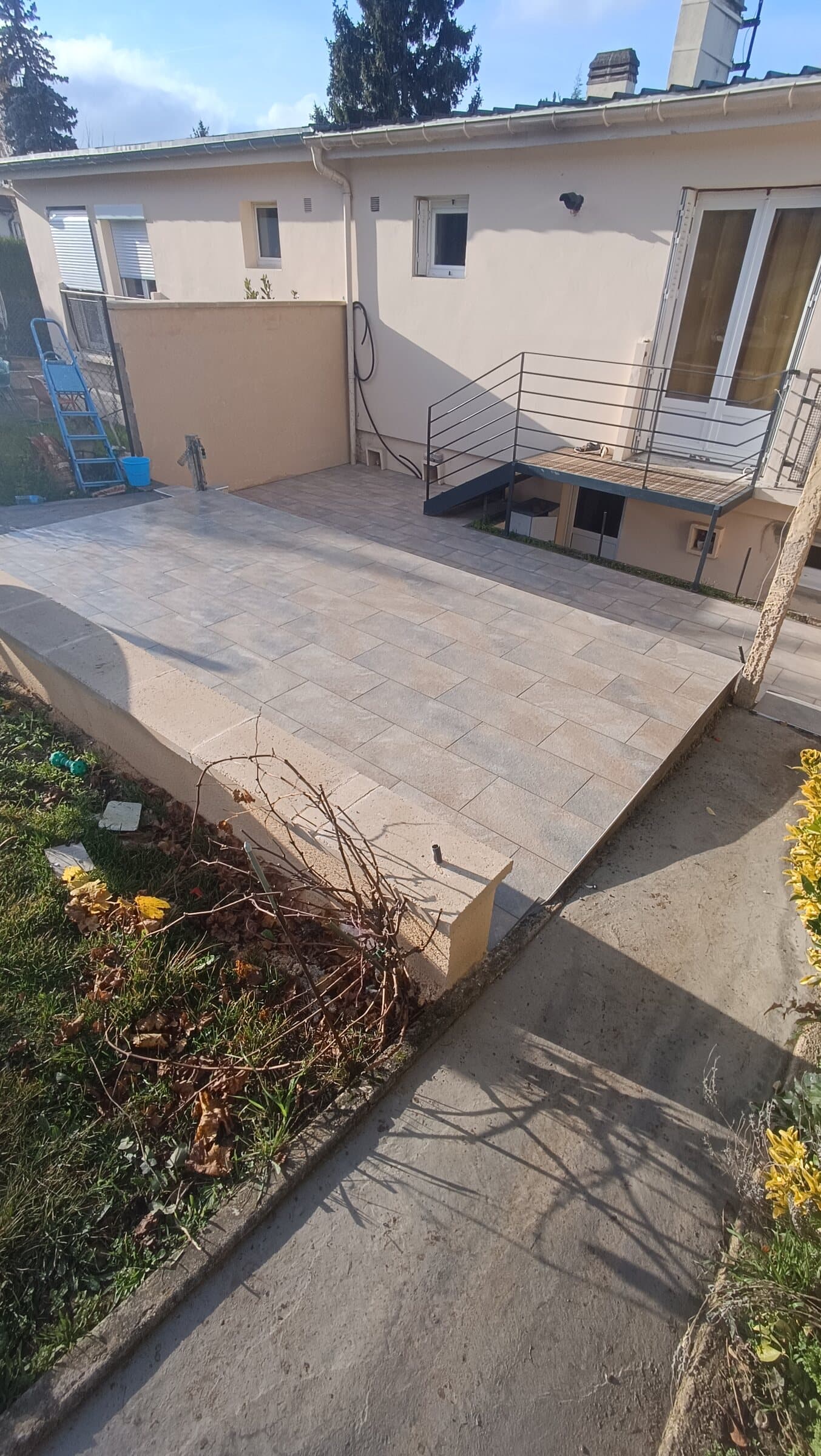
What climate and exposure?
Outdoors, tiles must first withstand frost. We choose a very low-porosity porcelain stoneware that the manufacturer declares frost resistant: water barely gets into the tile, so it cannot crack it when it freezes.
Look at the sunlight too. A dark shade stores heat and can become uncomfortable underfoot in midsummer, while a very light one can be dazzling. Sand, greige or stone tones are often a good compromise, and they show dust and footprints less.
Finally, tiles do not work alone: where frosts are frequent, the adhesive and grout must also be suitable for outdoor use. We closely follow the manufacturers’ guidance on this point.
How will you use the terrace?
Family meals, a pool surround, a path to the garden: the way you use the space guides the finish. A terrace exposed to rain needs an anti-slip surface, usually rated R11, or a suitable barefoot class around a pool. A textured finish gives more grip but holds a little more dirt.
A few useful questions before you choose:
- Is the terrace covered or exposed to the weather?
- Should it continue seamlessly from the indoor floor?
- Will heavy furniture or planters be moved regularly?
- Would you like simple upkeep with a broom and water?
For upkeep, regular sweeping and rinsing with clean water is usually enough. Leaves, moss or barbecue grease are easier to remove if you deal with them before they settle in.
What substrate and installation method?
A successful terrace depends a lot on what lies beneath the tiles. On a sound concrete slab, bonded installation is common: the substrate needs enough slope to drain water, and movement joints are planned to absorb the effects of temperature changes. These joints are part of the design, not a defect.
Porcelain pavers 20 mm thick can also be laid on pedestals or gravel, without adhesive or cement grout. This option helps water drain away and keeps access to pipes and cables. Think about the finishing details as well: stair nosings, outdoor skirting and the junction with the patio door threshold. During our visit, we assess the substrate with you to choose the most suitable technique.